I’ve seen many stories about an obscenely rich person obtaining living characters as a personal plaything for themselves or their children, but I doubt any of them were direct references to this story so much as just yet another commentary on how rich people live in a completely different world.
I think Jackie Gleason is primarily known for playing a decidedly blue collar guy, so it seems like an unusual choice to cast him as the eccentric millionaire. However it seems like most of Richard Pryor‘s movies in the 80s were about him reacting to finding himself in impossible situations, so the dissonance of agreeing to something bizarre he doesn’t believe in because he needs the money fits that pattern.
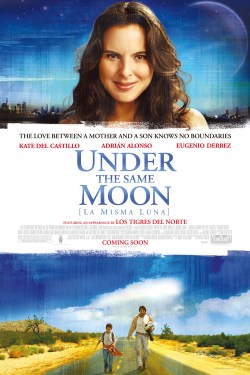
Under the Same Moon (la Misma Luna). Creando Films 2007.
Before watching the movie:
I didn’t know this movie existed before I watched it, so all I had to go on was that a lot of it is in Spanish, it’s about border crossing for family and Eugenio Derbez is in it. And I seriously can’t come up with more to say about it.
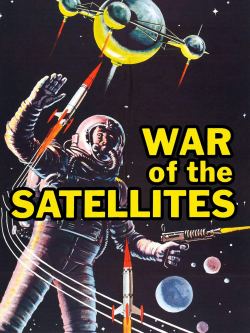
War of the Satellites. Santa Cruz Productions 1958.
Before watching the movie:
I probably know about as much about this movie as Roger Corman did when he decided to make it. Earth is about to start launching satellites and aliens disapprove, and it’s all very “hey, remember Sputnik?”
It sounds more interesting to watch than to write. The effects and action sequences will probably be hilarious but also the best part. It looks like even though the United Nations is standing in for the United States, they still manage to let the United States be the most American part of the Earth.
I like going into movies completely blank on them until I have to write about my nonexistent preconceptions.
I very vaguely recall a movie with this title being around back then, but I don’t remember anything about it. I didn’t even remember it was one of the movies they tried putting Matthew Perry in.
I see it’s another movie titled after a song they can easily license. It could be a direct reference to the proverb, but as it’s a love story, it’s going to be a reference to the love song.
I definitely did not know this is about a rushed relationship between an American guy and a Mexican woman and the problems created when their lives and families catch up with their choices until now.
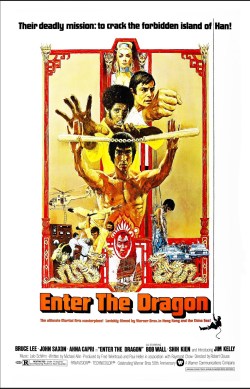
This is lauded as possibly the best martial arts movie of all time, but I’m looking for something about the story to interest me and it seems like the barest excuse plot. British Intelligence goes to a martial arts instructor and points him at a crime lord. Oh, I guess there’s a tournament he’s going undercover in to get close to the bad guy. That’s a bit better than them just saying “go fetch”, but it’s still a pretty thin plot.
I would say the fights need to be exceptionally good to make up for the sketchy plot, but of course they are. That’s what everyone already cared about with this movie. I feel like I’m being weird for asking it to also have a story.
Though the log line is essentially “Die Hard on a battleship”, the Navy setting somehow gets me thinking more of JackRyan. Thanks to the movies, I think of Jack Ryan as a civilian CIA bureaucrat, but a moment’s research turned up that he’s ex-Marine. So maybe Seagal’s character here is closer to Jack Ryan than I thought, but I was more interested on my initial discovery that Seagal is serving as a cook than when I found out he’s an ex-SEAL. It takes away from the appeal of an underdog for me the more prepared that underdog is for the challenge they face in the movie.
The fact that the terrorists are led by a disgruntled CIA operative intrigues me. Most 90s bad guys are generic terrorists, but they’re usually Eastern European, maybe with a specific ex-Soviet flavor. The head terrorist being rogue CIA opens up a possibility of critiquing American policies rather than just wrapping the good guys in the Stars and Stripes and painting the bad guys as whatever the top enemy of the US government is at the time. Though since this probably required extensive cooperation with the US Department of Defense in order to be able to use the battleship setting, I doubt it would be all that forward thinking.
I think the main reason I was never especially drawn to this movie was because I’m not that into fashion, but then movies can be themed around anything without requiring intimate knowledge of them. And maybe it was also something that didn’t appeal to me because it’s a women-oriented movie and I wasn’t as interested in those in 2006.
I do vaguely recall it being among the movies that I first got a real glimpse of what’s interesting about it at the Academy Awards that year, but like most other movies that I never really considered until the Oscars showed me more than any trailer did, I never really followed up.
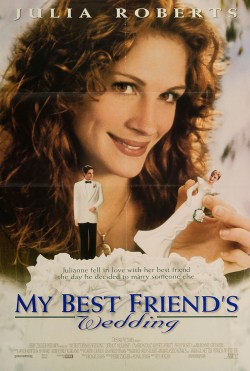
My best Friend’s Wedding. Predawn Productions 1997.
Before watching the movie:
I’ve been dimly aware of this as a relatively standout romantic comedy for a while, but I never really looked into it much. The idea of having to watch an old flame get married and how one copes with that is interesting, but as a romcom I don’t know if it’s going to have the kind of message I think would be more appropriate or if the old flame is going to leave the bride because true love.
Julia Roberts and Cameron Diaz are like two different generations of romcom royalty and it’s a little odd they’re cast opposite each other. Dermot Mulroney is a name I’ve seen around from time to time but even looking over his filmography I cannot remember seeing him in anything, and he looks like a stand-in for whatever more recognizable actor they actually wanted. I guess I’ve seen Rupert Everett in things other than Inspector Gadget, but that’s the only thing I ever think of for him.
Nancy Drew, Reporter. First National Pictures 1939.
Before watching the movie:
I’m not sure whether I’ve ever read a Nancy Drew story. I was probably more likely to have attempted the Hardy Boys, but neither interested me that much growing up. I was much more interested in Encyclopedia Brown.
I don’t recall a particular career or pastime being mentioned as what gets Nancy into sleuthing, and a quick skim of the Wikipedia page seems to show that she’s just a smart kid who happens to be in sleuthing distance of a lot of mysteries, like a teenaged Miss Marple. I was a little worried that by using “being a reporter” to justify her investigation into this mystery, the movie would be applying the name to a much older character, but it seems that she’s a school paper reporter, trying to win a journalism prize. Still seems like a lot of unnecessary scaffolding on “smart kid solves mysteries”.
What is this movie? Pointing a money canon at the screen. Probably billions of dollars to tell one of the oldest stories we have written down. Big battles, bigger stars, almost three hours of runtime for them to compete for like cinematic gladiators. Pretty and exciting and violent and maybe it even resembles the source material, but at least it’s Epic. That’s the impression I’ve always had of this movie as a former Latin student.
After watching the movie:
The city-states of the Aegean are at constant war, and Agamemnon of Mycenae intends to build an empire by conquering them, despite owing every battle to Achilles and his leadership of the Myrmidons. Meanwhile, as Trojan crown prince Hector has just finished negotiating a peace with Menelaus of Sparta, Hector’s brother Paris, infamous ladies’ man, took up an affair with Menelaus’s wife Helen. When Hector and his Trojans set sail for home, Helen leaves with them to stay with Paris. Seething from the insult, Menelaus goes to his brother Agamemnon to ask him to bring all the Greek armies together to take Helen back from Troy so he can kill her himself, which Agamemnon readily agrees to as the perfect excuse to add Troy to his collection of subjugated kingdoms. As the Greeks lay siege to Troy, Hector tries to find the diplomatic solutions that lead to the least harm done to his country and his people, but still accepts that Helen is a Trojan princess now. Meanwhile Hector’s father King Priam insists that everything is in the will of the gods and nothing can be done to change whatever fate is in store for them. While most of the Greeks loyally fight for Agamemnon, Achilles fights more for his own personal glory, and loathes being in service to a king that hides behind his troops.
I feel like 2004 is really late for a movie about Ancient Greece that’s been cast from a Who’s Who in British Acting with some pretty Americans thrown in for domestic appeal. While it was still too early for anyone to have considered it, I’d be much more interested in an all-Mediterranean production where people speak with actual Greek accents instead of pretending Ancient Greece was a Royal Shakespeare Company show. There’s at least one scene that takes place in a stone ruin, and while I guess that those were not unheard of in those times, it seems more like it was included because “Ancient Greece means broken columns scattered around the hillside, right?”
While this movie credits that it is “based on The Illiad“, Troy is sympathetic and they include an Aeneas cameo, so it feels more heavily influenced by the Aneid. The Illiad was written by Greeks to illustrate Greek glory, while the Aneid was written by a Roman to concoct a Trojan pedigree for Rome and therefore Troy was the nobler kingdom and Greece only won because they cheated. Greece is clearly the aggressor in the wrong here, and while Paris is also in the wrong, the rest of Troy is just caught cleaning up his mistakes. Paris isn’t even all that wrong because the first thing we learn about Menelaus is he ignores his wife to play with prettier, younger women right in front of her.
The main exception to the Greeks being the villains is the bad boy antihero Achilles, who only wants his own personal glory while chafing under his kingdom’s obligation to serve at the call of Menelaus. And yet despite his personal motivations he’s also shown to be one of the most honorable Greeks through his protection of Briseis, a captured priestess who happens to be Hector’s cousin. From the quick research I did, it sounds like they cleaned up the relationship a bit to make Achilles more noble, but I was surprised she was in the original material at all since the main thing I knew about Achilles’ personal relationships going in is that a lot of people enthusiastically read Patroclus as Achilles’ one true love and for all I knew, Briseis was created to give him a safe heterosexual love interest while playing Patroclus as his surrogate son.
While the last people who deserve a happy ending are the final couple, there’s a strong sense that the best ending isn’t to live happily ever after, but to get a prominent death. All the people we care most about get a classically tragic and noble death. All the people we like least get an exciting death at a hero’s hand. Paris and Helen just survive by hiding in the city until they escape while everyone else goes out and dies for them, and I guess they have to spend the rest of their lives with that knowledge.
There’s a ton of story in the fight sequences and for once I can actually follow what’s happening really well, and I can’t just tune out until the music dies down and I look up to see what the outcome of all the punching is. This is somewhat rare for modern action movies, and the prevailing theory is that a generation of cinematographers grew up on pan and scanned video making it impossible to read the fight scenes and decided that shaking the camera and cutting too quickly to get any useful information is how to make things exciting. But I think more than that, in this case the Illiad details a lot of events that happened in battle, so they actually had story beats to include in the sequence instead of just scripting “a fight scene happens and it’s the choreographer’s job to fill the next five minutes”.
This is one of the most engaging action movies I’ve watched in a while, especially considering the runtime and how much of it is action sequences. This is a throwback to the gigantic productions of the classics from the golden age of cinema, and while I’m pretty tired of cinematic epics casting white people with British accents and togas as Greeks and Romans (or proto-Romans here), they sure do make it almost worth the 2 hours, 40+ minutes.







 Yesterday's Movies