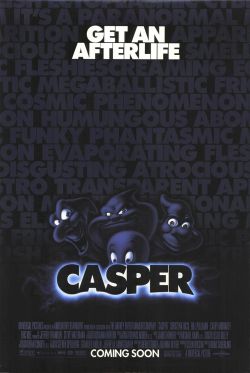
To be completely transparent, I do recall wanting to watch this movie and being in the room trying to watch it shortly after it came out. But it was a very large room with a lot of other things to do and I was very young and had a short attention span, and I don’t remember much beyond the fact that it was on the screen. I have much clearer, more recent memories, of a tie-in Pepsi commercial than I do of the movie itself. So I consider it more fair to review this as a “first time” watch than as a rewatch.
That said, this was probably my introduction to the world of Casper, though I may have seen some of the tie-in TV series. It looked so current and yet I’m sure I was also aware it was a property that had already been around.
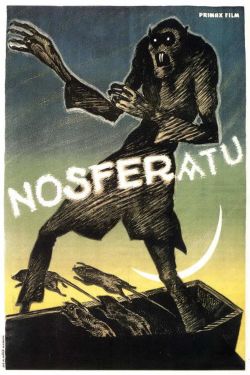
I’ve long known that this was the Dracula movie before Dracula, and managed to get some acclaim here even if it was in German (although or perhaps because it’s silent and therefore easier to translate). I don’t know offhand how much the extreme looseness of the adaptation was for copyright reasons (which, internationally, was still extremely loose at the time anyway) and how much was localization and the contemporary constraints of how stories were told on the silent screen.
When I was deciding on the next theme, I discovered that among the many different “_____ Month” observances for May, it is, according to Humans Vs. Zombies, “Zombie Awareness Month”. So be aware, I guess. The events of the past few years have demonstrated that zombie apocalypse stories don’t really go far enough with the dumb things people will do to spread contagions like zombism.
I already covered Night of the Living Dead a while ago, so I figured it was long past time to take a look at the other classic zombie franchise. These kinds of movies I’ve stayed away from for a very long time, but I’m pretty aware of Bruce Campbell, chainsaw wielding badass, coming back every few years to play Ash in yet another Evil Dead thing. I’m always interested in the changes that happen as a successful one shot becomes a franchise.
I don’t think anyone would have expected Esperanto to turn up in a selection of non-English films, but this was part of the inspiration for the theme. Well, to be more specific, I wanted to try an Esperanto film but I didn’t want it to be Incubus because the bad pronunciation is infamous. However, there are only four films known to be produced in Esperanto and this is the only one I was actually able to get my hands on. I guess this has lived pretty well off of getting William Shatner immediately before his big break. Though apparently it was thought lost until the 90s, and a good quality version was only just announced last year.
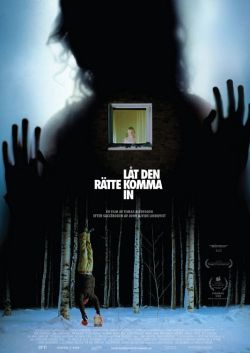
I’m pretty sure I remember promotion for this movie, which is strange because foreign films hardly ever get significant US advertising campaigns. However, I have very clear memories of ads for the subsequent English-language remake with a slightly different title confusing me because wasn’t this the same story that came out a couple years ago?
I remember a lot of window knocking and vampires in the snow. I think it’s a coming of age movie, so it would center around children? The title sounds like there are good vampires and bad vampires and you have to know which one to invite inside (a vampire rule I think this movie introduced to me).
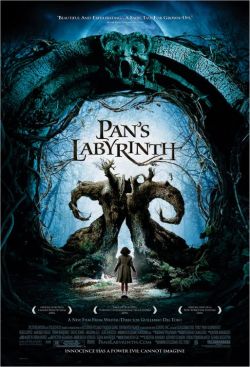
I never really had much interest in this movie when it came out. It looked like a horror movie thanks to the prominence of the Pale Man and I did not do horror movies even in 2006. This is the movie that made me aware of Guillermo del Toro as a filmmaker and probably most others, especially in this country. But mainly what I could say about it is that it appeared to be fantastical and dark story with a lot of fantasy production design and monsters.
I have a dim recollection of there being some buzz that this big budget tentpole movie is entirely in Spanish but I couldn’t have named it as a thing I knew about it until I was reminded very recently. In the past few weeks I’ve been watching a Latin American TV show and I’ve been impressed with how well I can follow it at this point in my learning of Spanish and I thought it would be an interesting exercise to do a month of non-English language movies.
After watching the movie:
Once upon a time, it is said that Princess Moanna was so consumed with curiosity about the human world that she went to see it for herself, was struck blind and amnesiac by the sunlight, and died, but her father, the King of the Underworld, believing she would return, built labyrinthine portals around the world for her and swore to wait until the end of time if necessary. In 1944 Francoist Spain, Captain Vidal of the Francoist forces mopping up the last republican rebels, summons Ofelia and her pregnant mother to his post so that he can see his son as soon after birth as possible. Ofelia detests Vidal and refuses to call him her father, and tells the fairy tales she’s obsessed with to her unborn brother to calm him through the difficult pregnancy. Along the road, Ofelia sees a large stickbug and believes it to be a fairy, which is confirmed to her when it comes to her room that night and transforms into a humanoid leading her into the nearby labyrinth to meet a faun that tells her she is the reincarnation of Princess Moanna, and if she completes the three tasks a magic book will only reveal to her when she’s alone, she will regain her immortality and return to her throne. The rebels Captain Vidal viciously persecutes seem to have unusually good help in the region, and it transpires that the captain’s housekeeper Mercedes and the doctor Vidal brought to save his son and if possible also his wife are secretly supplying them with food, medicine, and information. Ofelia becomes aware of this but doesn’t report them, as she can see that Vidal is cruel and not on the side of right, but also she’s more focused on her escape from this life into the world of the fae.
The duality of this movie feels like more of a hindrance than a strength. On the one hand, there’s the fairy tale story that’s very expertly rendered on screen but which I didn’t find very compelling because it’s a (graphic and gory) fairy tale with pretty standard tropes, and on the other hand, there’s the story of the dictatorship’s rebel-hunting captain and his hypocrisy and hubris against the desperation and risk-taking of the rebels under his nose, which I was much more taken with because of the more grounded humanity vs. fascism plot. Captain Vidal is a despicable villain you really want to see get defeated (which I suppose is the modern fairy tale), but the fairy side of the story is a few episodes of monsters and tricks and I found the only real tension to be how the human world plot that’s too big for Ofelia to affect but only respond to and escape from would interfere with her fantastical hero’s journey.
Del Toro’s insistence on producing this movie in Spanish means its cast is full of actors that are completely unfamiliar to English-speaking audiences. I wish I knew more of López, Verdú, and Angulo’s work. However, I simply don’t have enough to be able to really speak to their performances, other than that I was always watching López and Angulo whenever they were on the screen and as I came to realize the importance of Mercedes I watched Verdú closely too. The actor I do know is Doug Jones. In a movie otherwise filled with Spanish actors, Del Toro selected one of the best big-creature workers in Hollywood. As a very tall and flexible performer, his career has been almost entirely buried under latex and it seems more often than not dubbed over by other actors with bigger names. An alum of my school, he came back to star in a student film as a regular guy and when I learned who he was, I was very happy for him to have the chance to play just a regular guy, even if outside of Muncie, IN it’s one of his least known films (he does appear to have had other work without prosthetics, but also lower profile than his creature work). He learned Spanish to play the Faun, but was dubbed here too, though his work made the dub work better than if he had learned the lines phonetically. I’m glad to see him getting the recognition now that he was only beginning to receive when I first learned his name.
The greatest strength of this movie is the lush visual design. The mid-2000s were a great time for sci-fi/fantasy movies because CGI was expensive enough that they only used it where they needed it, limited enough that they put in the work to play to its strengths, and new enough that they gave it enough time to get it absolutely right, while practical work was also at a high state of maturity that truly impossible things could be absolutely convincing. It was a time when they made movies perfectly suited for behind the scenes featurettes rather than filler for streaming services. I believe the Faun is almost entirely practical, but between the prosthetics, the performance, and the lighting/color grading, he is a completely believable creature you’ve never seen before. Everything in the fantastical episodes looks like a page from a lovingly illustrated storybook, and the civil war story is one of the best-looking war movies I’ve ever seen.
I wish I knew more about the Spanish Civil War, the Republicans and the Nationalists. In history as taught in this country, Spain falls out of the narrative after the English defeat of the Spanish Armada, and their contribution to 20th century history is mainly from being the only country that was documenting the 1918 pandemic. I wish I cared more about the fairy tale. There is no Pan’s Labyrinth without its fairy tale, and it’s certainly one of the most beautiful and terrible fairy tales I have ever seen, but I just never felt the tension in that side of the movie. As much as this is very likely Del Toro’s masterpiece, I think I’d rather see Hellboy or The Shape of Water again.
When I was in middle school, I was obsessed with watching Michael J. Fox’s whole filmography for a while and I missed this somehow. I first remember learning it existed by finding it in a roommate’s DVD collection, and I never got around to it. I also got it confused with Fright Night a few times.
Eventually I found out it was a Michael J. Fox comedy and I still never got around to it. I’ve read the summary at least once and completely forgotten it every time I read it. At least twice, I got as far as saying, “yes, I will watch this movie” and then I saw this poster and thought maybe it was a more serious horror movie than I’d thought, and decided to pass.
I remember when this movie came out and being mildly interested but not very motivated to see it. It looked like an attempt to make another The Nightmare Before Christmas. And then I found it in my roommate’s open use DVD collection and thought maybe I’d watch it, but then maybe it would be good to blog about, but it would be a while before it would be old enough to cover.
And then I didn’t watch it, and about I moved out of that apartment, and then about ten years happened and I’m still blogging, so here’s my time to review it.
In 1999 a mockumentary film was released that had everyone wondering if it was made up or real. I remember it being hyped up as the scariest horror movie ever seen, though in retrospect, every horror movie would like you to believe it’s the scariest one ever. It was playing with the occult and with the barrier between reality and fiction, so I definitely stayed away at the time. For most of my young life, I stayed away from scary movies because I was afraid of being scared. When I decided to see what I was missing, I’ve almost always found them not worth the hype. And this movie had a lot of hype.
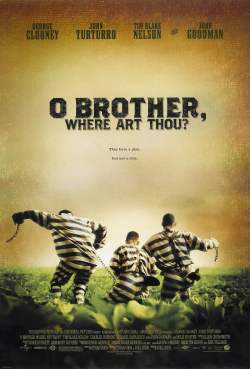
While I first watched this movie in high school, I think 9th grade English, it also has significance to me as the reason, or at least the excuse, to get Netflix. I had an assignment in a media class to analyze a scene and my group got O Brother Where Art Thou? and I used a free trial to get us a copy of the movie faster than the library could get it to us. That subscription back in the day made catching up on all the movies I’d never gotten around to possible, and while I was doing that and having opinions on them, I was looking for a creative project to put on the internet because I was also really getting into the heyday of webcomics. I didn’t think I was up to drawing a regular strip or making videos on a sustained basis at the time, but I could watch movies, have opinions, and share those opinions.
I’m glad to be able to say that in almost fifteen years, I’ve had something online every week, and I think I can still count on one hand the number that were just apologies for not even having old posts to recommend. I had a review online every week during a month where I had a full load of classes, a part time job, an assignment to write a novel in a month, and a weekly video series for my sketch comedy group’s blog. I got something up in weeks when I was moving all by myself and didn’t have internet service set up yet. I don’t remember what it was but I got something up the week I got married. I wanted to prove to myself I could stick to a posting schedule and it’s only in the last few months that I’ve had to evolve from staying up late on Thursday night to have something for Friday to writing over the weekend to have something by Monday. I’ve seen great movies I might not have gotten to without this push, and I’ve had a good excuse to rewatch movies I already loved and share why I love them.
Ulysses Everett McGill, a man with the gift of gab, leads his fellow convicts Pete and Delmar in an escape from their chain gang with the story of loot from a heist that he buried back home in a place that will be flooded to build a dam in just a few days. They go to Pete’s cousin for help, who immediately turns them in to Sheriff Cooley for the bounty, barely escaping the barn Cooley’s men try to burn them out of. Picking up hitchhiker Tommy Johnson, who says he sold his soul to the devil for guitar talent, they stop at a radio station where “a man will pay you to sing into a can” and record a song for some cash under the name “Soggy Bottom Boys”, then part ways with Tommy again. The gang is separated when some women at a river washing clothes drug them and when they wake up, they find Pete’s clothes laid out with nothing but a frog inside, and assume that they turned him into a frog, when really he’s been turned in for bounty, and confesses the location of the treasure under torture. Meanwhile, Everett and Pete arrive in Everett’s hometown and Everett meets up with the real reason he escaped from prison: his ex-wife is remarrying. All the while, the governor’s race is coming up, with the reform candidate Homer Stokes running a much more popular campaign than the incumbent, flour mill owner, and radio show host Pappy O’Daniel, and the people can’t get enough of that Soggy Bottom Boys record.
Even on this viewing, I can’t really tell how much was directly pulled from The Odyssey. There are the most obvious allusions, but they seem fairly superficial. Most of the misadventures along the way don’t seem to map to specific challenges faced by Odysseus, aside from the Sirens and the Cyclops, but especially the Cyclops is very surface level. It’s much easier to read the movie as a sketch of rural life in the Great Depression that draws some references from mythology to heighten the sense of being the little people in a world ruled by titans.
I’m surprised to learn that the central song of the piece, “Man of Constant Sorrow”, pre-existed the movie just as much as the other bluegrass and gospel music that is a persistent presence through the movie. I’d thought that it was written for the movie to specifically fit the mood they wanted for such a popular song and because “the man of constant sorrow” was one of Homer’s epithets for Odysseus. I see that the epithets include “much-enduring” and “man of pain”, but it seems that while “constant sorrow” could fit as other translations of those, it doesn’t seem to have been used in a popular enough translation to be significant. Regardless, it’s undeniable that the song was perfected for the movie.
I was always a bit confused as to the intended race of the characters. They’re played by three white men, but people keep calling them “Colored” or “miscegenated”, and while they do occasionally partner with Tommy Johnson, a Black man, they also have visibly darkened skin tones. For a while I thought that was some kind of aesthetic choice where they constantly have dirty faces because they’re working class in the Great Depression, but the thought crossed my mind this time around that they were meant to be mixed race, which would be a really bad look for a movie where a popular character gets run out on a rail the minute he outs himself as a white supremacist (a very 1990s moment). I’ve only come to realize now that they’re heavily tanned from working in the sun on the chain gang and the comments specifically from people who can see them are just about how they work with Tommy.
If anything, I’m more certain now that this movie is more about playing with historical and mythological elements more than taking them seriously. And that’s okay, remaking the old ideas in new ways is an important part of mythology and of storytelling. The story doesn’t feel as epic or meaningful as the way in which it’s presented seems to want it to be, but that just makes it more dreamlike, giving it the feeling of fantasy in a setting where everything has a natural explanation if you want it, but it’s not always the most compelling one.





 Yesterday's Movies