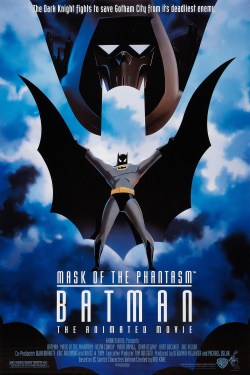
Batman: Mask of the Phantasm

Batman: Mask of the Phantasm. Warner Bros. 1993

Before watching the movie:

I have vague memories of watching Batman: The Animated Series as a kid. It was a thing that was on, sometimes I would watch it when it was available, but I don’t remember really making a habit of it. Even so, it defined Batman for me as a kid. I was aware of the live-action movies of course. I definitely remember at least one McDonald’s Happy Meal tie in that I got a Hot Wheels-size version of the best Batmobile out of, but I’m not sure the timelines actually sync up, since it would have been the 1991 promotion and I may have been a little young to be as aware of it as I remember.

Regardless, as for many my age, this is the definitive version of Batman to me. I’ve probably watched more episodes as an adult seeking them out, but the series brought as much plot and emotional complexity to half-hour episodes as was possible. It introduced characters and interpretations so compelling they were imported to the comics and other versions, it was the keystone to a shared-continuity animated franchise, and had two direct continuation series.

I’ve gotten around to Batman and Mister Freeze: Sub-Zero before, but I never made it to the first movie spinoff, the one that actually got released in theaters before. And it has taken me entirely too long to get here.

After watching the movie:

Batman busts a meeting of Gotham’s biggest crime lords, and in the ensuing chaos, Chuckie Sol gets accosted by a hooded, masked figure claiming to be his agent of death, who tricks him into crashing his car through a parking garage wall, leaving him dead. When bystanders look up at the commotion, they see Batman at the hole in the wall trying to understand what just happened, and news spreads fast that Batman might have graduated to murdering mob bosses. Councilman Arthur Reeves, in the mafia’s pocket, vows to finally have Batman arrested. Ten years earlier, in Bruce Wayne’s earliest days of crime fighting, before he figured out how to intimidate the criminals, he met Andrea Beaumont in the cemetery talking to her mother’s grave close to where Bruce was talking to his own parents, and they quickly bonded. Bruce became torn between the vow he made to his parents to avenge them against all crime in Gotham when he realized that plan never included having someone waiting for him at home, and their relationship ultimately ended in heartbreak. Now, Andrea is returning to Gotham, and Batman realizes that the gangsters getting killed all share a link with Andrea’s businessman father, but his investigation is hampered by Gotham law enforcement hunting him down for the same murders, while the next don on the Phantasm’s list has gone to a former mook and friend from the old days for help, now in business for himself as the Clown Prince of Crime.

When a movie gets made from a tv show, especially one still on the air, one of the important questions to answer is what can this do that an episode can’t. Aside from the corny early 90s CGI fly-through of Gotham skyscrapers right at the beginning that doesn’t contribute much except to show “look what we can do with a movie budget!” the answer is that I think this story plays with lore too integral to the Batman mythos to trust to a 30-minute story. It doesn’t just rehash Batman’s origin story, it goes inside the often-elided time when Bruce was still trying to figure out how to be a vigilante and tells us the love of his life we never knew about was there. It dangles the Joker’s life before he was the Joker in front of us. It shows us that Gotham once hosted a World’s Fair. And it does it all with incredible care, so that it feels like they’re sharing secrets instead of polluting an established story.

They also take a lot of time to explore the tragedy of being Bruce Wayne. For the first time here, he really has to wrestle with the conflict between what he feels he owes to his parents and a chance to let himself just be happy, and the weight of that dilemma is keenly felt. Of course, in a more realistic world, Bruce would be better served by getting therapy and realizing that maybe he took a flying leap from his parents getting accidentally shot in a mugging gone wrong to a duty to them to clean up all the crime in the city with only wits, fists, and gadgets, but this is not the world he lives in, and regardless of what he wants, becoming Batman is the destiny he cannot escape. And in this story, he rages against that.

Involving the Joker feels almost obligatory. The Phantasm may have unacceptable methods, but the motives are too sympathetic to be satisfyingly defeated alone, so one of the regular villains has to come in the last act to raise the stakes and be properly thwarted in the end. There’s really only one good reason it had to be the Joker, and one could argue that some of the other rogues could be made to make sense too (isn’t the Penguin a crime boss?), but he’s mostly just the one brought into the game late because he’s Batman’s most iconic antagonist, and this is this version of Batman’s first movie. It can feel about as lazy as making Moriarty the surprise mastermind behind every Sherlock Holmes mystery. A version of this story could probably be wrapped up with a dire fight against a well-prepared mob boss and his goons instead of against one of the Usual Suspects while on the run from the law. But Mark Hamill’s Joker is too charismatically sinister to be too upset about.

While this was shown in theaters, that was a relatively late decision, and it could’ve stood to have more production time to make it ready for cinemas instead of just a surprisingly good direct to video feature. I felt I was watching really good storytelling, but I didn’t quite feel like I was watching a real movie. Whatever it is or isn’t, even by the standards of Batman: TAS, this is masterful.


Across the Universe

Across the Universe. Revolution Studios 2007.

Before watching the movie:

I remember this being huge and then pretty much disappearing. I was actually a little confused for a while about whether this and Moulin Rouge were the same movie, because that is how little I knew about the story, and I know not much more now. I think I’ve seen one clip that has the romantic leads singing in a trippy cosmic setting that’s probably not diegetic, so I can rule out a space movie and probably a fantastical movie.

Essentially, all anyone will say about it is that it’s the musical that’s all Beatles music (though it seems it actually also includes Beatles-adjacent music, but I always thought Wings sounded like The Beatles anyway). Nobody really said much about what Mamma Mia was about either, and it’s not like the familiar music being the draw left it a disappointment, but this movie hasn’t had the impact that Mamma Mia did, so I’m not sure what I’m going to get, but it will probably look pretty and sound familiar.

Continue reading

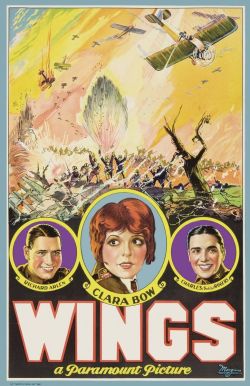
Wings

Wings. Paramount Pictures 1927.

Before watching the movie:

The machinery of the Public Domain has shuddered back to life and as with last year, new works are transferring ownership to the people. Perhaps most notably, the copyright on the final Conan Doyle Sherlock Holmes stories finally expired, so it will be entertaining to see what shaky legal argument the Doyle Estate will come up with to try to continue to get money out of Holmes now. Also joining the Public Domain is The Jazz Singer, which has an enduring technical legacy and, I hear, little else to recommend it.

But the member of the PD class of 2023 that I’ve heard the most praise for is Wings. While I don’t recall hearing of it before now, it has not only a good reputation in story but also very impressive aerial cinematography for its time. I’m strongly reminded of Those Magnificent Men in their Flying Machines, so much as I remember anything about it. While that movie was set in the first world war but made in the 1960s, it will be interesting to see how the 1920s retold WWI.

Continue reading

The Thing (1982)

The Thing. Universal Pictures 1982.

Before watching the movie:

This is one more legend that’s a bit of a black box. I know there’s a monster besieging a research station in the Arctic or Antarctic, and that’s about it. I think almost the entire movie goes without showing the monster? It might be an alien but it’s left ambiguous? The poster is as much of a masterpiece as the movie, they say, and it is a fantastic poster.

I dimly recall a TV special about practical and visual effects in horror movies in general that may have touched on this movie, but I’m not sure. The images I’m remembering could be almost any horror movie, but they could fit a frozen research station for all I know.

Continue reading

Movies of my Yesterdays: Miracle on 34th Street (1994)

I had intended to do another movie on the basis of a current meme, but I didn’t really feel up to that and then the week got away from me, so instead I’m going to share my thoughts on rewatching one of my favorite Christmas movies.

I vaguely remember when this was new, even if I don’t directly remember it coming out. We got around to it eventually on video, probably the next year. Movies are available at home the next month now somehow, but they still had a very long embargo then, and of course they wouldn’t release a Christmas movie in the summer, so I’m sure I saw it the next year. I do recall reading the novelization a few years later, though while I remember it being the first time I noticed scenes in a novelization not from the book, I don’t really remember more than that. I especially like to watch this toward the beginning of the season since it begins with the end of the Thanksgiving Parade. I wouldn’t say it’s ever been a foundational tradition of the season, but it’s almost always been there, and it carries innocent nostalgia in my mind, so it’s time to see if it holds up to a modern cynic.

Miracle on 34th Street. 20th Century Fox 1994.

Dorey Walker is a very guarded and practical single mother and teaches her young daughter Susan the same, including that there is no Santa Claus to put any childish faith in, something their neighbor friend, lawyer Brian Bedford, finds concerning. Dorey’s employer, old fashioned department store Cole’s, prepares to go into an incredibly important holiday shopping season, as if they don’t make enough to pay off the debts they incurred evading a hostile takeover from Victor Landburgh’s soulless megacorp Shopper’s Express, they’ll default and Landburgh could buy up the company for cheap. This year, Cole’s will have a new Santa at their flagship 34th Street store thanks to an emergency hire of a charming old man named Kriss who was very particular about the portrayal of the character for the Thanksgiving Parade. Dorey, Susan, and Brian soon discover that this man, isn’t just a very good Santa, he believes he is the legendary Kriss Kringle. Brian and Kriss make it their mission to make believers out of Dorey and Susan, but while the family wrestle with their personal faith, Kriss’s unexpected habit of giving parents advice on what other stores have items Cole’s doesn’t have or charges too much for is paying off in brand loyalty and inspires Cole’s to introduce a dedicated “find it for you” concierge service, pulling in an unprecedentedly fantastic sales season and foiling Landbergh’s plans, unless he can scheme a way to get Kriss out of the way. Also Dorey suggests that doubting Susan can test Kriss with the kind of Christmas wish she’d never ask her mother for, and Susan tells him her most impossible private wish: a father, a brother, and a big house upstate.

I’m coming back to this movie with a lot more context. I’ve since seen the original movie, and I had thought this carried through the old real life rivalry between Macy and Gimbel. Of course, few remember Gimbel’s anymore, or anything of that rivalry. It’s actually a pretty clever translation into an outmoded business from a friendlier time fighting for its life against the modern mercenary corporate raiders. While the pacing and tone is much more approachable here, I do have to say I prefer the resolution of the earlier version, in which the judge decides to uphold the decision already made by the US Mail to accept Kriss’s identity, rather than taking the extra leaps of “if the government can trust in God on faith to the point they print it on their money, this court can accept on faith that Santa Claus exists”, and further “Santa Claus exists and therefore this court trusts that Mr. Kringle is who he says he is.” But then, better legal experts have torn these movies apart on the court proceedings.

I had always taken the narrative intent to be that Kriss is indeed Santa Claus, so I was surprised a year or two ago to see someone arguing that the point is that we don’t know and it shouldn’t matter. That might be more the case for the earlier version, but this treatment gives us every reason to believe Kriss short of seeing him do a scrap of supernatural magic. My current take is that, while anyone can embody the spirit of Santa Claus, Kriss has so dedicated himself to it that he might as well be the man in the flesh, but the most important thing is the spirit he inspires in others, and which the public reciprocates in the support that is unfortunately nerfed down to not much more than a montage of signs in this telling, moving to the audience but not to the plot.

The warm feelings of this movie persist. It’s the inspiring story of a man who gives himself to the world, and most of the world, on learning he’s in trouble, responding in kind. It’s a lesson in open minds and open hearts, and the joy and wonder that can result from being the one person to insist on caring for and loving everyone in spite of the hostility of the societal machine running as usual.

Journey to the Center of Time

Journey to the Center of Time. Borealis Enterprises 1967.

Before watching the movie:

A nonsensical title on a movie about time travel? This should be just the kind of campy midcentury sci-fi story I’ve really been itching for. They’re getting harder to come by, at least ones that are new to me.

I don’t know much more about the plot than that some scientists get lost in time, and really, does one actually need more?

Continue reading

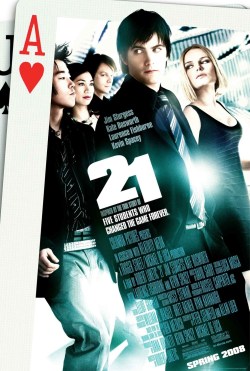
21

21. Columbia Pictures 2008.

Before watching the movie:

This is a movie I have clear memories of being advertised in a poster case in my high school cafeteria, which wouldn’t be possible since it was released almost a full year after I graduated. It does occupy close quarters in my brain with The Perfect Score (a 2004 heist movie about students stealing SAT answers) and Easy A (a reimagining of The Scarlet Letter set in a modern high school that didn’t even come out until 2010, why is it even in this trio?), but I don’t recall Perfect Score being in that case. Memory is incredibly fluid sometimes.

Right. This is the one with MIT students counting cards in Las Vegas. It seems like it’s being positioned as a heist movie, so it will be interesting to see how the film makes counting cards visually and emotionally engaging.

Continue reading

Movies of My Yesterdays: An American Tail

This movie has always existed. Or at least, it’s always existed in my world. As my ability to remember the past coalesced, this title was among the ones that was already in our collection, which I was watching regularly. Maybe not as regularly as others, but I can’t clearly remember how much I watched one or the other. Anyway, I wasn’t allowed to watch anything more than once in a day, which I came to realize later in life was probably mostly for the preservation of my parents’ sanity, and in a distant second, the cassette tapes my brother and I were wearing out.

I’m not sure if I have actually watched An American Tail since we gave up on our Betamax player long, long after that format war had been lost. Maybe I felt I’d rewatched it so many times I didn’t need to see it anymore. It didn’t hold all that much special significance for me to seek it out. Don Bluth movies are a little weird anyway, and of those that I was regularly exposed to in my youth, this doesn’t have the “wait, I don’t think I got the complexities of the plot” that The Secret of NIMH had, the polished, hit-me-in-just-the-right-moment chemistry of Anastasia, or the dinosaurs of The Land Before Time. And so I come back to it only now in a spirit of “wait, I don’t think I grasped the complexities of the emotions and satire”. By the time I really comprehended that it was about the immigration experience, I was too busy for it.

An American Tail. Amblin Entertainment 1986.

In Russia in the late 1800s, the Mousekewitz family lives in fear of cats, but otherwise content, though Papa will tell anyone who will or won’t listen of a land called America where there are no cats, a place of such abundance the streets are paved with cheese and a mouse can live at peace. When the human village their mousehole is in is burned in a pogrom and Cossack cats terrorize the fleeing mice, the Mousekewitz family boards a boat to New York. Shortly before arrival, the middle child Fievel is swept out to sea in a storm and given up for lost by his family. Luckily, Fievel ends up in a bottle and floats to shore on his own, where he is found by a French pigeon who assures him it’s possible to find his family and directs him to the harbor they would have come in through. However, before he can reach the immigration office, he is instead found by Warren T. Rat, who promises to take Fievel to his family but instead sells him to a sweatshop. With the help of an Italian teen named Tony, Fievel escapes the sweatshop and sets off looking for his family in a city that is not as free of cats as the tales they old in the Old Country.

Dom DeLouise’s friendly cat character is a much smaller part than I remembered, which is honestly just as well, though I think they corrected the oversight of having their biggest star in such a small role for the sequel. Christopher Plummer was completely unrecognizable with a French accent. I’m sorry to say that when I try to decide how I feel about Fievel’s performance, what mainly comes to mind is Caillou, the public television bane of parents everywhere. What is absolutely perfect, however, is Papa Mousekewitz, who sounds exactly like a beloved Jewish Russian father should (though that’s probably partly from stereotypes). There’s so much warmth there.

When I was very young, I didn’t really understand accents. That is, in the sense that I didn’t understand that they connoted something about the person speaking. This meant I lost a lot of information as a kid watching this movie, especially the other people telling their cat attack stories on the boat, who were not Italian and Irish stereotypes to me, just cartoon people with silly cartoon voices. So I guess I never picked up how just about every person Fievel interacts with in America is an immigrant, including Honest John the politician and Gussie Mausheimer the wealthiest mouse in town. The people helping Fievel, from the bottom to the top, are from elsewhere, even the ones who have cemented their place in American society. And by the end, so has Fievel.

I came into it this time expecting a relatable story of immigration, but I kind of feel like while Fievel’s circumstances get him into a variety of places that allow us to see a spectrum of life in a city full of immigrants, his own story is so out of the ordinary that I didn’t get that sense. Also, the story was a hundred years in the past when the movie came out, so culture has significantly changed. I guess the point of the story is that anything can happen in America, and when I think about why that’s more likely than in Europe, I have to come to the conclusion that social hierarchies were in flux because it was still a new society. That’s less true now than a hundred years ago. What hasn’t changed is the stark contrast between the reputation and reality of the New World, and the harsh conditions desperate people brave for their fresh start.

Safe House

Safe House. Filmquest Pictures 1999.

Before watching the movie:

For all the actors I mowed through the filmographies of when I first realized I had the ability to discover and summon movies, somehow I never did that for Patrick Stewart. Most Star Trek regulars don’t seem to have enough high profile projects outside of Star Trek to get me to think in those kinds of terms.

So I first heard of this movie from a viral video recasting a clip of it as “Look at how jarringly out of character Captain Picard is!” I had to look up the source, and it sounded funny, but it’s heavily marketed as a thriller. Maybe it moves from comedy to thriller?

Also it seems to be a TV movie, which I try to avoid, but here it is anyway.

Continue reading

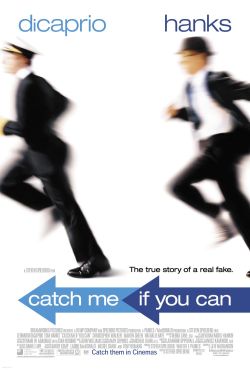
Catch Me If You Can

Catch Me if You Can. Paramount Pictures 2003.

Before watching the movie:

I have an impression this is kind of comedic, but I’m not sure if that’s accurate. Or if it came from trailers that may or may not have been pitching it in a different direction to get more ticket sales. What I’m looking at now says drama, but I’m guessing it’s a bit of a modern caper with a lot of fun thrown into a high-stakes drama.

All I know for sure is that it’s based on the memoirs of a real con man, and it’s about the con man eluding capture from a pursuing detective, and I think there’s a lot of bluffs that get a little over the top, but there hasn’t been much talk about this movie since it came out, so I’m not sure of much of anything except the cast.

Continue reading