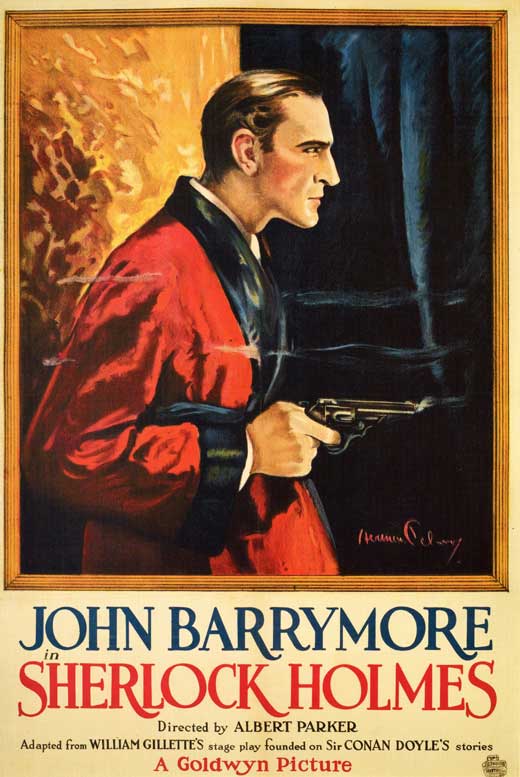
Sherlock Holmes (/Moriarty). Goldwyn Pictures Corporation 1922.
Before watching the movie:
I was somewhat concerned to see that this movie is also silent and based on the Gillette play, but a glance at the first paragraph of the synopsis tells me this is definitely a different adaptation. Not being familiar with the text of the play I can’t say if the differences were added to this production or subtracted from the other one. This looks hopefully more engaging.
When I first attached a disambiguating year to a title, I never expected to do two movies with the same title back to back. I can’t say it’s just because there were fewer movies to get confused with back then, since even the past decade has seen multiple productions simply titled “Sherlock Holmes”. So it’s worth noting that in Britain it was titled Moriarty.
Not very long after I started this blog, I realized that I was reviewing so many Sherlock Holmes films that they would probably qualify for their own genre category. It seems like I’ve covered more than is tagged there, but it’s still a healthy sampling.
My fondness for Sherlock Holmes stories far predates Yesterday’s Movies, so I find myself running out of eligible and desirable films to review. The list of adaptations seems endless, but once I apply my criteria for a review selection, they’re just about dried up. As well, I have no intention of leaving recent and future films to age into eligibility before watching them, so I’ve decided to give Sherlock a retirement sendoff with a themed month of some of the most notable films.
It is only right, then, to begin with the silent film adaptation of the very first official adaptation of Doyle’s work. William Gillette was given an attempted stageplay by Doyle and tasked with rewriting it into something serviceable, and also starred as Holmes. Holmes’s iconic deerstalker hat, calabash pipe, and “Elementary, dear Watson” all came from Gillette. This is a historic piece of Sherlockiana.
Bonus mini-review: Sherlock Holmes Baffled (1900) – In his first-ever film appearance, the world’s greatest detective is no match for camera magic.
John Wayne is remembered as playing cowboys or other heroes of the American West. So it always surprises me to learn that some of his most praised movies cast him as something else. Here, he’s an Irishman who spent some time as a boxer in America, but has come home to court a wife.
The main conflict appears to be that his lover’s brother doesn’t approve of the match, and the argument gets physical. Boy is that a mistake to let an argument come to blows with a professional boxer. I really hope that conflict is exaggerated by the synopsis I’m seeing and it’s mostly just courtship in the Irish countryside. I’m also curious to see if Wayne bothers with an Irish accent.
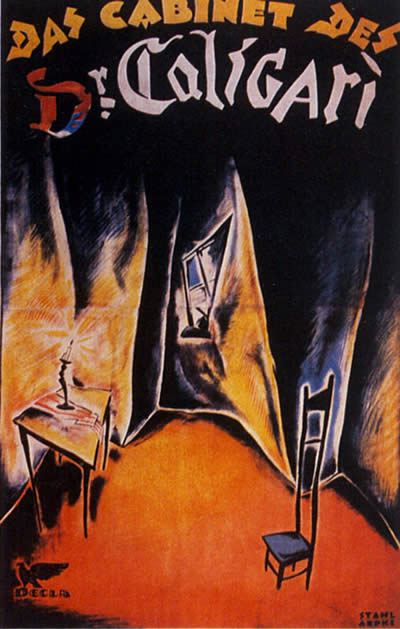
The Cabinet of Dr. Caligari (Das Cabinet Des Dr. Caligari). Decla Film 1920.
Before watching the movie:
I find it a fascinating idea to tell a psychological horror story, framed as a man telling his story of how his life was ruined, in a silent medium. There seems to be so much language wrapped up in that concept, and yet a silent film will necessarily tell the story visually and use cards only sparingly. It has the potential to go very wrong, yet from its legendary status I know that’s probably not the case.
It also looks like it’s doing some tremendous innovating in stylized cinematography. I couldn’t imagine trying to communicate exotic psychological events with what was available in 1920s technology, but the example frames look like they’re creating some very artistic effects.
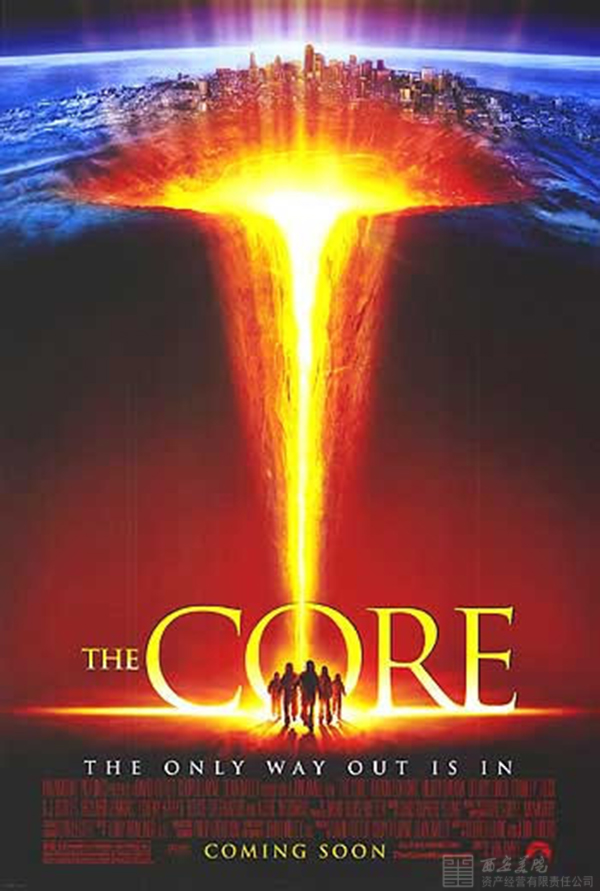
I think of this movie as “Armageddon with Dirtronauts” (from a Dick van Dyke Show pitch). I really just know the log line, something’s wrong with the Earth’s core and we need to go fix it. Apparently it’s too dangerous to send robots to that kind of temperature and pressure so humans have to go instead.
It’s actually a fascinating idea to send an expedition below the crust, even if the conceit is ludicrous. At least Journey to the Center of the Earth is so divorced from science (I think even in Verne’s day the hollow Earth theory was at least on the way out) that it can be read as pure fantasy. With what we currently understand about the planet, no good can come from sending people that deep inside it, and the only sources of story there come from just how implausible such an expedition would be. So I’m going to try to enjoy this on its internal consistency, because the way it pretends to be science just preemptively frustrates me, but it otherwise looks like fun.
I suppose I shouldn’t be so surprised a movie known for one sequence (slow-motion astronauts) is over three hours long. After all, Lawrence of Arabia is mainly known for the desert montage. I am surprised to learn the scope of the movie. I always understood it to chronicle the Mercury program, and possibly Gemini leading to Apollo. But I’m now seeing it described as starting with breaking the sound barrier. On reflection, supersonic speed would have come from the same test programs that produced the Space Race astronauts, but I never connect aeronautics and astronautics.
I should address that I somehow got the idea the film was made in the 60s, which is ridiculous, since it chronicles the 60s. But on the rare occasions I thought about that, I considered it kind of a propaganda film doing a victory lap after a successful moon landing. Which would still probably make it early 70s, but that’s quibbling.
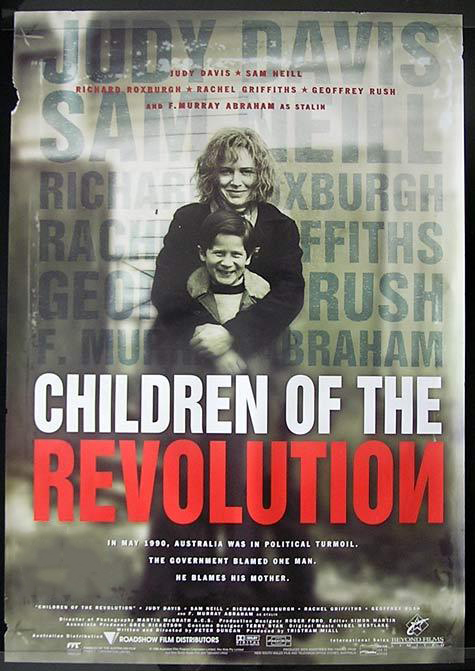
This just came up in my digital recommendations a few weeks ago. I thought at first it was a documentary because the promotional images really don’t do much to convey that this is a scripted comedy, instead really getting into the cold war aesthetic.
So basically an Australian woman raises Josef Stalin’s love child in the true Party way, and somehow this leads to political disaster in the modern day. My first thought is that it’s another Australian comedy inserting Australians into places in history where they were not (an interesting apparent trend that may not exist outside these two movies, and I could do with more stories of real Australian history), but I’m really looking forward to the journey getting there, especially with a cast of familiar names, some of which I can actually place.
Kevin Costner is on the poster, but I’m not going to talk about him right now. I’m sure I’ll have plenty to say after the fact.
I’m not sure if I heard the news late at night or in the morning. Last Thursday, and on into the weekend, the internet was filled with euologies for Alan Rickman. It was too late to cover last week.
But more than ever before, I had a sense that people weren’t mourning an actor, they were mourning his roles. Nobody was eulogizing Alan Rickman, they were eulogizing Severus Snape, Hans Gruber, Metatron, and Alex Dane/Dr. Lazarus. And I simply felt that nobody had a sense of what Rickman was really like, since nobody would accuse him of actually being like an abusive professor, terrorist, aut al. I sure didn’t know what he was like, but I try to believe the best about people, and that’s been borne out by some statements from people who knew him personally.
And so, here I am reviewing one of his more popular movies, where he plays another villain. Well, I can’t review him narrating a viral video for charity. This was a movie that came up a lot in a way that didn’t seem to focus too much on the character, and of the two that came up that I hadn’t seen, this one seemed a better choice. It’s also the version most directly spoofed by Robin Hood: Men In Tights.
This hinges around a digital heist, but the summaries focus on the persuasion required to get the hacker to hack. Even Hollywood hacking can’t sustain a whole film (even The Net is mostly real-world action), so I expect very little of the excitement actually comes from a guy sitting at a laptop typing until the money is stolen.
I have the impression of the mastermind of the heist as a figure not directly involved in the plot aside from hiring people, coercing people, and hiring people to coerce, but there’s one more headliner than I would expect in that notion, so maybe he’s in the middle of it all, giving orders. I know far too little of use for comment beforehand.
Movies of my Yesterdays is a new irregular series where instead of writing about a movie I’ve never seen, I choose a movie important to my past and discuss why that is.
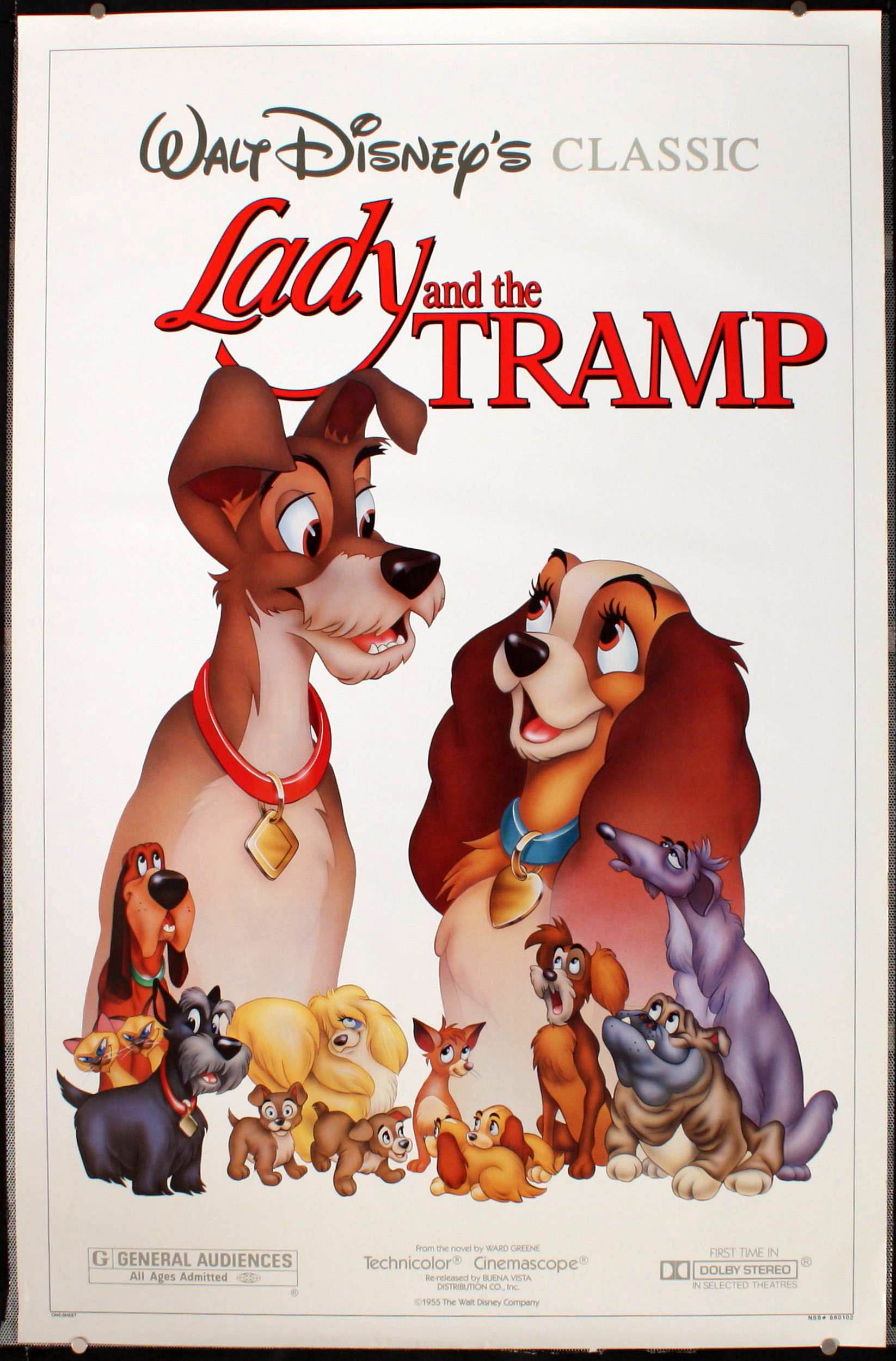
It is fitting to start with Lady and the Tramp, because not only is it bookended with Christmases, but it’s the first movie I had growing up. I don’t remember a time with it as the only tape, and there were others more important to me later, but this was the first.
As the first, it inspired the house rule that we could only watch a thing once a day, for my parents’ sanity. It is a rule I’ve long internalized, though occasionally I’ll break it and rewatch something brand new to me within a few hours. It still did not save the tape, which was the furthest gone by the time we gave up on the Betamax player.
Obviously, I remember the love story the most, but there’s quite a bit of adventure gotten up to that certainly appealed to me. But at the start, I think what was important to me as a very young child was that it was about dogs and it was a cartoon. It never mattered to me that it was about a girl dog, or that it was a love story. Maybe I was more invested in the male characters that are pretty much every other dog, but nobody taught me to be afraid of “girls’ stories” at that age. Kids will be happy with any well-told story until they’re told why they shouldn’t be. Later, I remember being embarrassed about how interested I was in seeing Pocahontas, but that was when I was older and more socialized.
I reached a point in my early teens when I noticed that there were several movies I’d seen so often that I was just letting them wash over me without thinking much about what was going on. Perhaps that awakening to analyzing what I was watching was the beginning of what I do here.
Coming back to this I think I’ve spent long enough away from it to break out of that old brain dead habit, but even so, there’s plenty of new things to notice and appreciate. I never really gave much thought to the human story going on, with the growth of Jim Dear and Darling’s family, as more than how it affects the dogs. I never considered how much the dogs’ story is rooted in the real lives and mannerisms of dogs as understood by humans. This is every moment familiar and every frame new.









 Yesterday's Movies