Incubus

Incubus. Daystar Productions 1966.

Before watching the movie:

I don’t think anyone would have expected Esperanto to turn up in a selection of non-English films, but this was part of the inspiration for the theme. Well, to be more specific, I wanted to try an Esperanto film but I didn’t want it to be Incubus because the bad pronunciation is infamous. However, there are only four films known to be produced in Esperanto and this is the only one I was actually able to get my hands on. I guess this has lived pretty well off of getting William Shatner immediately before his big break. Though apparently it was thought lost until the 90s, and a good quality version was only just announced last year.

Continue reading

Amélie

Amélie. UGC/Canal+ 2001.

Before watching the movie:

I recall pretty well the appearance of this movie on the media landscape. I don’t think I saw any trailers, but Audrey Tautou’s face was suddenly in a lot of places. I never got any sense of why people loved this movie, but it looked like a painting and was probably a romance, so I never really took an interest in it. But it kept being out there, and when I decided to do a tour of foreign-language movies, this was an easy pick.

I have to wonder if I’d have been more enticed by a direct translation of the French title. “Amélie” tells me nothing except that it’s about a girl named Amélie. “The Fabulous Destiny of Amélie Poulain” at least conveys some kind of tone and direction.

Continue reading

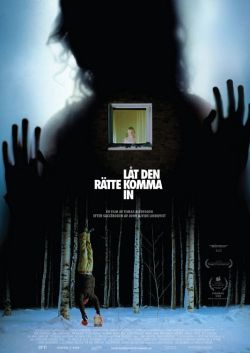
Let the Right One In

Let the Right One In. EFTI 2008.

Before watching the movie:

I’m pretty sure I remember promotion for this movie, which is strange because foreign films hardly ever get significant US advertising campaigns. However, I have very clear memories of ads for the subsequent English-language remake with a slightly different title confusing me because wasn’t this the same story that came out a couple years ago?

I remember a lot of window knocking and vampires in the snow. I think it’s a coming of age movie, so it would center around children? The title sounds like there are good vampires and bad vampires and you have to know which one to invite inside (a vampire rule I think this movie introduced to me).

Continue reading

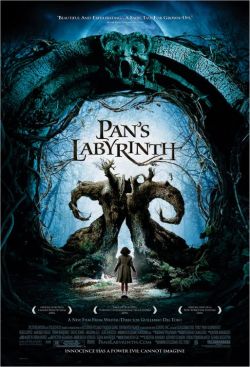
Pan’s Labyrinth

Pan’s Labyrinth. Estudios Picasso 2006.

Before watching the movie:

I never really had much interest in this movie when it came out. It looked like a horror movie thanks to the prominence of the Pale Man and I did not do horror movies even in 2006. This is the movie that made me aware of Guillermo del Toro as a filmmaker and probably most others, especially in this country. But mainly what I could say about it is that it appeared to be fantastical and dark story with a lot of fantasy production design and monsters.

I have a dim recollection of there being some buzz that this big budget tentpole movie is entirely in Spanish but I couldn’t have named it as a thing I knew about it until I was reminded very recently. In the past few weeks I’ve been watching a Latin American TV show and I’ve been impressed with how well I can follow it at this point in my learning of Spanish and I thought it would be an interesting exercise to do a month of non-English language movies.

After watching the movie:

Once upon a time, it is said that Princess Moanna was so consumed with curiosity about the human world that she went to see it for herself, was struck blind and amnesiac by the sunlight, and died, but her father, the King of the Underworld, believing she would return, built labyrinthine portals around the world for her and swore to wait until the end of time if necessary. In 1944 Francoist Spain, Captain Vidal of the Francoist forces mopping up the last republican rebels, summons Ofelia and her pregnant mother to his post so that he can see his son as soon after birth as possible. Ofelia detests Vidal and refuses to call him her father, and tells the fairy tales she’s obsessed with to her unborn brother to calm him through the difficult pregnancy. Along the road, Ofelia sees a large stickbug and believes it to be a fairy, which is confirmed to her when it comes to her room that night and transforms into a humanoid leading her into the nearby labyrinth to meet a faun that tells her she is the reincarnation of Princess Moanna, and if she completes the three tasks a magic book will only reveal to her when she’s alone, she will regain her immortality and return to her throne. The rebels Captain Vidal viciously persecutes seem to have unusually good help in the region, and it transpires that the captain’s housekeeper Mercedes and the doctor Vidal brought to save his son and if possible also his wife are secretly supplying them with food, medicine, and information. Ofelia becomes aware of this but doesn’t report them, as she can see that Vidal is cruel and not on the side of right, but also she’s more focused on her escape from this life into the world of the fae.

The duality of this movie feels like more of a hindrance than a strength. On the one hand, there’s the fairy tale story that’s very expertly rendered on screen but which I didn’t find very compelling because it’s a (graphic and gory) fairy tale with pretty standard tropes, and on the other hand, there’s the story of the dictatorship’s rebel-hunting captain and his hypocrisy and hubris against the desperation and risk-taking of the rebels under his nose, which I was much more taken with because of the more grounded humanity vs. fascism plot. Captain Vidal is a despicable villain you really want to see get defeated (which I suppose is the modern fairy tale), but the fairy side of the story is a few episodes of monsters and tricks and I found the only real tension to be how the human world plot that’s too big for Ofelia to affect but only respond to and escape from would interfere with her fantastical hero’s journey.

Del Toro’s insistence on producing this movie in Spanish means its cast is full of actors that are completely unfamiliar to English-speaking audiences. I wish I knew more of López, Verdú, and Angulo’s work. However, I simply don’t have enough to be able to really speak to their performances, other than that I was always watching López and Angulo whenever they were on the screen and as I came to realize the importance of Mercedes I watched Verdú closely too. The actor I do know is Doug Jones. In a movie otherwise filled with Spanish actors, Del Toro selected one of the best big-creature workers in Hollywood. As a very tall and flexible performer, his career has been almost entirely buried under latex and it seems more often than not dubbed over by other actors with bigger names. An alum of my school, he came back to star in a student film as a regular guy and when I learned who he was, I was very happy for him to have the chance to play just a regular guy, even if outside of Muncie, IN it’s one of his least known films (he does appear to have had other work without prosthetics, but also lower profile than his creature work). He learned Spanish to play the Faun, but was dubbed here too, though his work made the dub work better than if he had learned the lines phonetically. I’m glad to see him getting the recognition now that he was only beginning to receive when I first learned his name.

The greatest strength of this movie is the lush visual design. The mid-2000s were a great time for sci-fi/fantasy movies because CGI was expensive enough that they only used it where they needed it, limited enough that they put in the work to play to its strengths, and new enough that they gave it enough time to get it absolutely right, while practical work was also at a high state of maturity that truly impossible things could be absolutely convincing. It was a time when they made movies perfectly suited for behind the scenes featurettes rather than filler for streaming services. I believe the Faun is almost entirely practical, but between the prosthetics, the performance, and the lighting/color grading, he is a completely believable creature you’ve never seen before. Everything in the fantastical episodes looks like a page from a lovingly illustrated storybook, and the civil war story is one of the best-looking war movies I’ve ever seen.

I wish I knew more about the Spanish Civil War, the Republicans and the Nationalists. In history as taught in this country, Spain falls out of the narrative after the English defeat of the Spanish Armada, and their contribution to 20th century history is mainly from being the only country that was documenting the 1918 pandemic. I wish I cared more about the fairy tale. There is no Pan’s Labyrinth without its fairy tale, and it’s certainly one of the most beautiful and terrible fairy tales I have ever seen, but I just never felt the tension in that side of the movie. As much as this is very likely Del Toro’s masterpiece, I think I’d rather see Hellboy or The Shape of Water again.

Steamboat Bill, Jr.

Steamboat Bill, Jr. United Artists 1928.

Before watching the movie:

I didn’t really have any interest in this movie until very recently, though I had been aware of the title. It always seemed a little odd to me that Buster Keaton had at least two movies with “Junior” tacked on to them, and as I was disappointed that Sherlock Jr. didn’t have any connection to the Great Detective other than the protagonist being a detective enthusiast and dreaming himself into a detective adventure and didn’t even get the reference being made to “Steamboat Bill”, I never bothered. Until I learned about its connection to “Steamboat Willie”.

This is a particularly momentous year for the Public Domain as, after buying an extension of copyright law multiple times to prevent it, “Steamboat Willie” and therefore at least the early form of Mickey Mouse has lapsed in copyright and now belongs to everybody. What I didn’t know was that the title of that short was a reference to the song “Steamboat Bill”, and there is debate whether Keaton’s movie was an inspiration for the short, as they were released the same year. Apparently the copyright of this movie was not renewed and so expired in 1956, but the connection certainly got my attention.

Continue reading

Animal Crackers

Animal Crackers. Paramount Pictures 1930.

Before watching the movie:

Once again, this movie is not in the public domain yet, but thanks to being based on a stage musical, the score and song lyrics are. Though apparently not the script of that stage show, which I don’t know the legal mechanisms behind. Aside from Marx Brothers Vaudeville schtick, I don’t really know what to expect here.

When I think “Animal Crackers” and musical, I think of the song made famous by Shirley Temple, but it seems not even the song is here, let alone Temple, so I’m already going in a little disappointed.

Continue reading

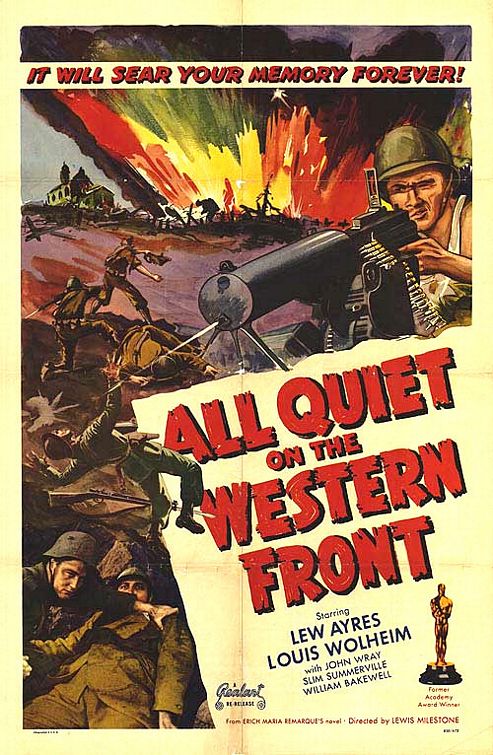
All Quiet on the Western Front (1930)

All Quiet on the Western Front. Universal Studios 1930.

Before watching the movie:

While this movie’s copyright has not expired, the book is as of this year in the public domain (and so is the original English translation, which I hadn’t realized came so quickly after). I’ve considered coming to this one a few times when an antiwar story would have topical currency, but I never made it all the way.

I mostly know only in vague terms how directly this story illustrates the hell and futility of war, aside from having heard of the scene where a protagonist kills an enemy soldier in a foxhole and, on examining the dead man’s pockets, realizes just how relatably human the “enemy” really is.

Continue reading

The Circus

The Circus. Charlie Chaplin Studios 1928.

Before watching the movie:

It seems strange that works entering the public domain is now an annual thing, as it’s been frozen for most of the part of my life I was aware of such matters. Is this really the sixth year of welcoming new works into common ownership? It seems like only the third, but I distinctly remember being inspired to cover Safety Last! because its copyright was expiring and that was indeed 2019. I’m going to be exploring the Public Domain Class of 2024 this month. Not every movie will itself be owned by the commons, but there will be a connection in every case.

I remember enjoying Modern Times, The Great Dictator, and to a lesser extent, City Lights (which I remember more as good cinema than good comedy), but I’m not sure I’ve ever really considered Charlie Chaplin a favorite, aside from the speech at the end of “Dictator”. As he’s one of the early film personalities that were bigger than their films, all of his works seem to blur together for me, and I’m not as motivated to see a Chaplin film as some others, so I didn’t even know this existed before it came up as among the most celebrated works whose copyright expires this year. I don’t even know what to expect other than “probably Tramp antics.”

Continue reading

The Yesties!

It’s the Yesties! An inaugural event to close out a month of Oscar Bait movies with Yesterday’s Movies’ own major awards and not a clever gimmick to cover for a filler week!

Best of January: Ip Man

I didn’t have a theme in January because I had the idea to switch to themes late in the month. Therefore this is the most uneven field of candidates. The only other real competitor was Wings, but the voting body is likely biased toward more modern pacing.

Best Jukebox Musical: Mamma Mia!

This award was won on ABBA’s back. It’s entirely too much fun to be touched by any other movie in the category, but it’s likely also the best at either crafting the plot around the songs or fitting the songs naturally into the plot.

Best Animated: Batman: Mask of the Phantasm

This may seem like a bias toward nostalgia, but the deciding factor here was that this was the only movie I was fully able to follow and didn’t have any more glaringly unfortunate decisions than “of course it’s the Joker again”.

Best Documentary: Man on Wire

This was a charming story and well-paced. I learned a lot in the documentary month but Man on Wire was the best all around entry. Note: F For Fake disqualified for the last act.

Best of the Worst: Stop! Or My Mom Will Shoot!

This was a tough decision, since two of the infamously bad selections were quite passable if a bit offbeat and out of the norm. I ultimately chose this one because a grounded 80s comedy looks and feels just a bit better than a 2000s sci-fi with not quite enough budget for — I’m sorry I have to stop this award presentation. I have just been informed that I had already watched and reviewed “Stop!” ten years ago! I honestly did not remember the earlier viewing until I realized I had two different posts available to link with that title. It looks like it fared much better the second time, but I’m afraid due to disqualification, I have to give it to The Adventures of Pluto Nash. Hopefully this is only the second time I’ve reviewed a movie I later realized I’d already watched before without marking it as such.

Worst of the Worst: The Conqueror

Possibly the biggest mistake of a production I’ve ever had the misfortune to sit through for this blog. Enough said.

Best Mockumentary: Bob Roberts

In a category filled with strong but problematic entries that don’t all fully fit the category, I’m a little surprised how chilling a satire came out of a Saturday Night Live skit.

Best Anthology: Twilight Zone: The Movie

None of the anthology selections were all that evenly put together, but that’s what an anthology is for. Twilight Zone had the best overall tone and the highest highs.

Best Overlong Anthology Segment: “Smooth Criminal” from Moonwalker

If you can compartmentalize away everything that has since been learned about the star, “Smooth Criminal” is a fairly interesting children’s adventure fantasy, which goes a long way toward beating a moderately funny beat for beat parody of a single movie that completely destroyed the pacing of the feature.

Best Crutch: The Movies of My Yesterdays series

I enjoy taking a break from trying to gather often slim to nonexistent impressions from a distance into a few coherent paragraphs and instead writing a more introspective introduction, and of course going back to old favorites is always fun.

Best Classic Musical: Paint Your Wagon

I’m just as surprised as everyone else. It should not work. And yet it does. Nobody could have been prepared for this movie in the 60s, but the comedy sticks with you and the music hits some high points and usually avoids overstaying its welcome.

Best… Horror? The Frighteners

I waited entirely too long on this movie because I let a poster scare me away. It’s difficult to judge the month of October because every selection is in a different genre but can be seen as generally Halloweenish. But Frighteners was the one that rewarded my anticipation the most.

Best Duo Movie: Thelma and Louise

I was surprised to discover this isn’t as much a part of Cinemaphile culture as I thought it was, but I suspect that’s down to a mix of recency and not being a story the Movie Bros want to be told.

Best Movie Duo: Romy and Michelle

I can’t award the dark horse movie that belonged to the duo bunch even less than I thought going in, but the title pair have the best relationship of the lot and also the boldest fashion sense.

Best of the Best: Twelve Angry Men

You don’t often see a play that’s been optimized for the screen. You see plenty of plays that are brought to the screen and “opened up” to take advantage of not being locked to a stage, but this is a movie of a play that was written for television, which is a genre that has gone away. It reaches literary highs and does narrative moves with the camera while reaching for the best of literary, stage, and cinematic excellence, though it may not have the best grasp on the law.

Most Overwrought Special Header: The one at the top of this page

I thought I was going to make headers for every theme, but I lose a lot of time to getting an acceptable compromise between my vision and what I can beat my tools into doing for me, so I skipped it for the most part. I think this one took over three hours that I’d intended to spend already writing.

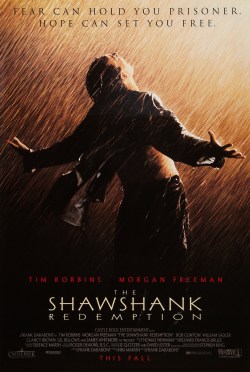
The Shawshank Redemption

The Shawshank Redemption. Castle Rock Entertainment 1994.

Before watching the movie:

There are two things this movie is famous for: the tunnel escape from the end of the movie, and Morgan Freeman’s distinctive narration. I want to say this is the movie that cemented Freeman’s reputation as an actor but I’d have to study his filmography more to say for sure.

Freeman’s role is so large in the popular consciousness that I couldn’t even tell you who the guy he’s narrating about is played by.

Continue reading