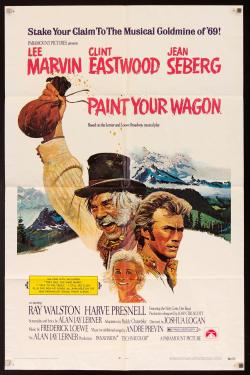
I didn’t mean to put two westerns back to back, but I couldn’t finish a month of musicals without Paint Your Wagon and I didn’t realize this was a short month.
I know precious little about this movie other than that it has Western movie stars not known for singing bafflingly cast in a musical. And I also know about the Simpsons taking the mickey out of it, but it’s so ridiculous that it has to be completely unrelated to the actual movie, no matter how ridiculous the movie itself is.
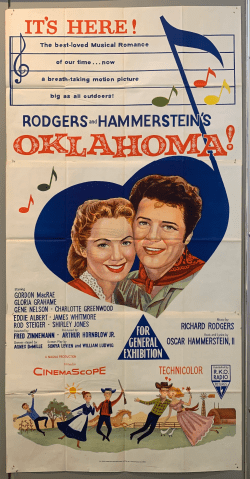
I have no idea what this is about, other than that it’s set in Oklahoma in the 19th century and has a lot of songs that have become standards with lives of their own, maybe more than any other.
I guess it’s a love story on the prairie? I have nothing to go on but those famous songs. It’s almost certainly going to have a lot of scenes outside for the purpose of taking advantage of being a movie and no longer a stage play, but how much will that actually matter?
After watching the movie:
Cowboy Curly McLain has a prickly relationship with Laurey Williams, farm heiress. They both take quite a lot of sport out of knocking each other down a peg, and while neither of them would admit affection for each other, they are both secretly fond of one another, something that Laurey’s Aunt Eller, the widowed owner of their farm, can plainly see. Everyone in the region is excited about a box social being held in the evening, and Curly comes to suggest that Laurey go with him in a fancy wagon he will be renting, but Laurey already accepted the invitation from her hired hand Jud. Jud is a simple, brutish kind of man, but when Laurey starts to think about breaking off with him to go with Curley, Jud’s response suggests it would be dangerous to disappoint him. Meanwhile, Will Parker, another cowboy, has just returned from the fair in Kansas City and, having won a roping contest, now has the $50 his girlfriend Ado Annie’s father said he wouldn’t be allowed to marry her without. But while Will was away, Annie, a fun loving, variety seeking girl, has been taking up with the traveling peddler Ali Hakim, a man who is clearly in a habit of leading on girls with promises of marriage he doesn’t intend to keep. Annie’s father, especially keen to keep Will from marrying his daughter, pressures Ali to marry her instead, and Ali starts searching for any way out, like helping Will press his agreement with Annie’s father while trying to also keep his intentions from Annie, though Will has his reservations about marrying so flighty a girl. As Jud and Laurey drive to the box social, Jud tries to force a kiss on her, and she wrestles him away, whips the horses into a bolt, and takes off for the dance alone, with Jud swearing not to let her be rid of him so easily.
Early in the movie, I felt like none of the songs were really doing much to build the plot, but somehow I didn’t care as much about that as usual. Maybe it’s because the stakes were relatively low and the songs were familiar, but for a long stretch of the movie I was happy to let the story take a back seat to yet another song painting a picture of romanticized, whitewashed rural life in the Oklahoma territory. I only particularly felt they should be getting on with it during a couple of incredibly lengthy dance numbers. By the time we get to the box social the plot has finally fully engaged, and I was fully engaged with it. However it’s weird the lengths the movie went to to make sure everyone knows within Code decency how violent and perverted Jud is and then treat him as so minor a complication to Curly and Laurey’s romance that the fight that finishes him for good is pretty much over the minute it begins, and Curly has no figurative blood on his hands whatsoever.
I have tags for some of these actors so I must have seen them in other things (I particularly remember the name Gordon MacRae but I couldn’t tell you what I’ve seen him in). The one exception is that I knew the Persian peddler Ali instantly as Oliver Douglas of Green Acres, Eddie Albert. His accent is all over the place and I’m not sure it has any resemblance to a Persian accent, but then neither is his appearance, and that’s par for the course with productions from this era. But knowing him from a kooky TV sitcom made it especially weird to see him playing such a rake, even if a bit of a bumbling one.
At least three songs have gone on beyond this musical. Everyone knows “Oh What a Beautiful Morning”, which is a beautiful song about not very much, and “Surrey with the Fringe On Top” is just as much a chestnut (though I was surprised that the original lyric was “Isinglass curtains” and not “clear glass curtains”. I had to look up Isinglass, but it makes infinitely more sense to call that substance “curtains”), and I was surprised how late the title song, perhaps most famous in my generation for the Sesame Street skit where the muppet keeps getting the wrong opening vowel, comes in. It’s not nearly as prominent a song as the other two, which are major recurring themes.
The story is a bit unusual, but somehow I’ve never been more okay with letting the plot slide while the show takes more interest in its musical numbers. Almost all of them are worth the time, even if they aren’t about much of anything but a mood. I’m not sure what it means to romanticize a past where just about everyone is excited about impending modernization, but on the other hand, I miss being excited about the future too, so maybe I do understand it. This is just a portrait of an idyllic day in an idyllic time, and it’s nice to be in that space for a little while.
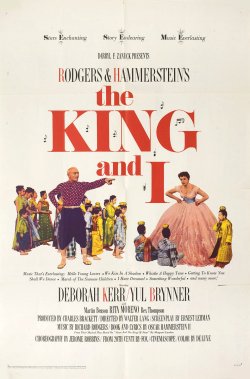
This is one of the most enduring musicals of classic Hollywood (an era I’m sure some would argue I’m stretching). I always had the sense it was something of a modern fairy tale, a common woman swept into the royal court and falling in love. It didn’t seem that interesting except for how popular it is. I think I’ve come across before that she’s there to teach the king’s children, but I keep forgetting it. I also don’t always remember that the king is Siamese until I remember that another title in its orbit is “Anna and the King of Siam”, which explains why his fashion doesn’t look much like the Western perception of kings.
I may have encountered this in some dusty streaming back catalogs or cheap collection of classic movies, but it didn’t appeal much to me on the face of it. Much more recently, I learned that it’s the source of the tongue-twister scene I think I saw in an AFI special about “the pellet with the poison is in the vessel with the pestle”, which I always wanted to find. The climactic swordfight is also highly praised by fight choreographers, I believe coming behind few other than the famous Princess Bride duel.
I’ve seen a few other Danny Kaye movies, but I only just now realized I might have been confusing him with Dennis Day occasionally. Kaye seems to be someone who used to be much more appreciated, but has been forgotten since the New Hollywood revolution.
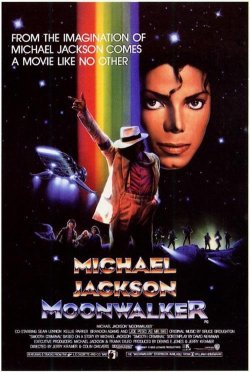
I’ve heard very little of this beyond that it exists and apparently isn’t just a concert film or a set of music videos. There was a video game tie-in that was only based on one of the segments, which is about half of what I ever heard about this.
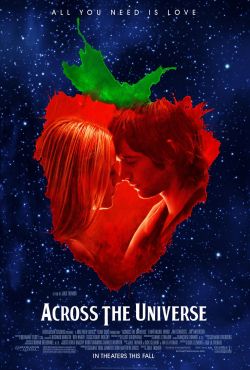
I remember this being huge and then pretty much disappearing. I was actually a little confused for a while about whether this and Moulin Rouge were the same movie, because that is how little I knew about the story, and I know not much more now. I think I’ve seen one clip that has the romantic leads singing in a trippy cosmic setting that’s probably not diegetic, so I can rule out a space movie and probably a fantastical movie.
Essentially, all anyone will say about it is that it’s the musical that’s all Beatles music (though it seems it actually also includes Beatles-adjacent music, but I always thought Wings sounded like The Beatles anyway). Nobody really said much about what Mamma Mia was about either, and it’s not like the familiar music being the draw left it a disappointment, but this movie hasn’t had the impact that Mamma Mia did, so I’m not sure what I’m going to get, but it will probably look pretty and sound familiar.
When I decided to cover jukebox musicals, I did some research to try to get some more variety. I found that Wikipedia is a bit lax with their definition of a jukebox musical. My impression is that they count any musical that has at least one preexisting song in it. However, a significant percentage of the songs in this show seem to be songs that were not originated for the production, and among those, many seem to be from the time the story is set in, if not already associated with the 1904 World’s Fair. It is at least close enough that I’ll take it.
That said, a lot of musicals from the golden age of Hollywood musicals have songs that originated with them but have become completely divorced from them and become standards. I’ve been taken by surprise by some other musicals, but in studying the musical credits I see that “The Trolley Song” and “Have Yourself a Merry Little Christmas” both appear to have basically originated with this movie, but have long since come to stand on their own.
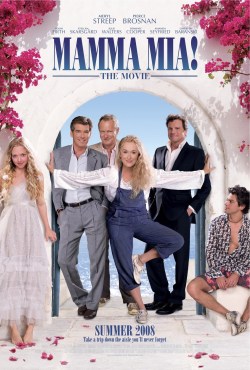
Unsurprisingly, I have very little knowledge of this movie from the outside. Maybe I should try to find more movies people have completely given away so I have more to talk about. I did manage to get that it had something to do with a cabaret in historic Paris, and after a long time being confused about the provenance of songs like “Lady Marmalade”, I came to learn it was a jukebox musical. This was probably the first jukebox musical I became aware of that wasn’t entirely from the catalog of a single act, and I was a bit surprised that could be done, since the most notable jukebox musicals I know of are Mamma Mia! (ABBA), Across the Universe (Beatles), and Movin’ Out (Billy Joel, not a movie yet as far as I know, also until just now I thought the show was bafflingly titled after “Scenes from an Italian Restaurant”). Stepping back I think what happened was it became a bit of a trend for long-running musicians to license out their collected works to Broadway, which is certainly a lot easier to build a show around than trying to license the works that make sense to use in the story you planned to tell.
Anyway, the briefest of looks over what this movie is about informs me that it is not directly related to the previous movies named for the Moulin Rouge venue, and that Henri Toulouse-Latrec is a character here, which kind of makes sense since I know he painted for the Parisian cabarets and I dimly recall one for the Moulin Rouge. He’s not the lead, but does look a bit important, so I don’t know how that’s going to go.
This month I will be focusing on jukebox musicals, and for me in my experience, there’s no more obvious jukebox musical film than Mamma Mia!, having spent 20 years of my life being very aware of the music of ABBA being in the world.
I think the plot they’ve woven around these songs has to do with a woman about to get married and wanting to include the father she’s never met, only to find out her mother isn’t sure who that is because she was seeing three men at the same time. There are some details I’m more certain of than others, but finding fathers is definitely involved. I think the “sequel” is a flashback to that time frame entirely.
The music has already stood the test of time, but the story has to live up to one episode of Community that spent all its budget on the gag that the Halloween party playlist was just ABBA’s entire catalog.
This movie has always existed. Or at least, it’s always existed in my world. As my ability to remember the past coalesced, this title was among the ones that was already in our collection, which I was watching regularly. Maybe not as regularly as others, but I can’t clearly remember how much I watched one or the other. Anyway, I wasn’t allowed to watch anything more than once in a day, which I came to realize later in life was probably mostly for the preservation of my parents’ sanity, and in a distant second, the cassette tapes my brother and I were wearing out.
I’m not sure if I have actually watched An American Tail since we gave up on our Betamax player long, long after that format war had been lost. Maybe I felt I’d rewatched it so many times I didn’t need to see it anymore. It didn’t hold all that much special significance for me to seek it out. Don Bluth movies are a little weird anyway, and of those that I was regularly exposed to in my youth, this doesn’t have the “wait, I don’t think I got the complexities of the plot” that The Secret of NIMH had, the polished, hit-me-in-just-the-right-moment chemistry of Anastasia, or the dinosaurs of The Land Before Time. And so I come back to it only now in a spirit of “wait, I don’t think I grasped the complexities of the emotions and satire”. By the time I really comprehended that it was about the immigration experience, I was too busy for it.
An American Tail. Amblin Entertainment 1986.
In Russia in the late 1800s, the Mousekewitz family lives in fear of cats, but otherwise content, though Papa will tell anyone who will or won’t listen of a land called America where there are no cats, a place of such abundance the streets are paved with cheese and a mouse can live at peace. When the human village their mousehole is in is burned in a pogrom and Cossack cats terrorize the fleeing mice, the Mousekewitz family boards a boat to New York. Shortly before arrival, the middle child Fievel is swept out to sea in a storm and given up for lost by his family. Luckily, Fievel ends up in a bottle and floats to shore on his own, where he is found by a French pigeon who assures him it’s possible to find his family and directs him to the harbor they would have come in through. However, before he can reach the immigration office, he is instead found by Warren T. Rat, who promises to take Fievel to his family but instead sells him to a sweatshop. With the help of an Italian teen named Tony, Fievel escapes the sweatshop and sets off looking for his family in a city that is not as free of cats as the tales they old in the Old Country.
Dom DeLouise’s friendly cat character is a much smaller part than I remembered, which is honestly just as well, though I think they corrected the oversight of having their biggest star in such a small role for the sequel. Christopher Plummer was completely unrecognizable with a French accent. I’m sorry to say that when I try to decide how I feel about Fievel’s performance, what mainly comes to mind is Caillou, the public television bane of parents everywhere. What is absolutely perfect, however, is Papa Mousekewitz, who sounds exactly like a beloved Jewish Russian father should (though that’s probably partly from stereotypes). There’s so much warmth there.
When I was very young, I didn’t really understand accents. That is, in the sense that I didn’t understand that they connoted something about the person speaking. This meant I lost a lot of information as a kid watching this movie, especially the other people telling their cat attack stories on the boat, who were not Italian and Irish stereotypes to me, just cartoon people with silly cartoon voices. So I guess I never picked up how just about every person Fievel interacts with in America is an immigrant, including Honest John the politician and Gussie Mausheimer the wealthiest mouse in town. The people helping Fievel, from the bottom to the top, are from elsewhere, even the ones who have cemented their place in American society. And by the end, so has Fievel.
I came into it this time expecting a relatable story of immigration, but I kind of feel like while Fievel’s circumstances get him into a variety of places that allow us to see a spectrum of life in a city full of immigrants, his own story is so out of the ordinary that I didn’t get that sense. Also, the story was a hundred years in the past when the movie came out, so culture has significantly changed. I guess the point of the story is that anything can happen in America, and when I think about why that’s more likely than in Europe, I have to come to the conclusion that social hierarchies were in flux because it was still a new society. That’s less true now than a hundred years ago. What hasn’t changed is the stark contrast between the reputation and reality of the New World, and the harsh conditions desperate people brave for their fresh start.







 Yesterday's Movies