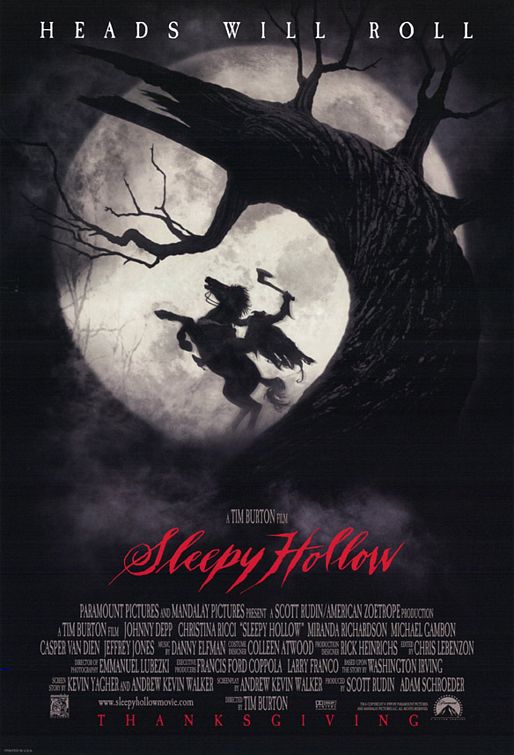
I principally know the story of The Legend of Sleepy Hollow through the Disney featurette. Wishbone did an adaptation, but it was the second season that I’m much less familiar with. It would be easy to go more into why Crane gets involved with the Horseman legend than the Disney version did, but it seems to pretty simply be that he’s spooked by the legend and happens to become a victim of the ghost. Well, it was a short story to begin with, so there’s not much need or room for motivation.
In this version, apparently they’ve changed him from a superstitious schoolteacher to a detective. Which would let him drive the plot, so it might be a good change. Definitely means this is going to be very different. Continue reading →
I really like modern-day spellcaster stories. I even found a fondness for Teen Witch. So all that I really need to be interested in this movie is that there are modern-day witch sisters. Their conflict has something to do with a curse upon their love lives, which sets up a romantic comedy apparently, and I’m further intrigued. I also like Sandra Bullock in pretty much anything, so that’s a plus as well. Continue reading →
Movies of my Yesterdays is a new irregular series where instead of writing about a movie I’ve never seen, I choose a movie important to my past and discuss why that is.
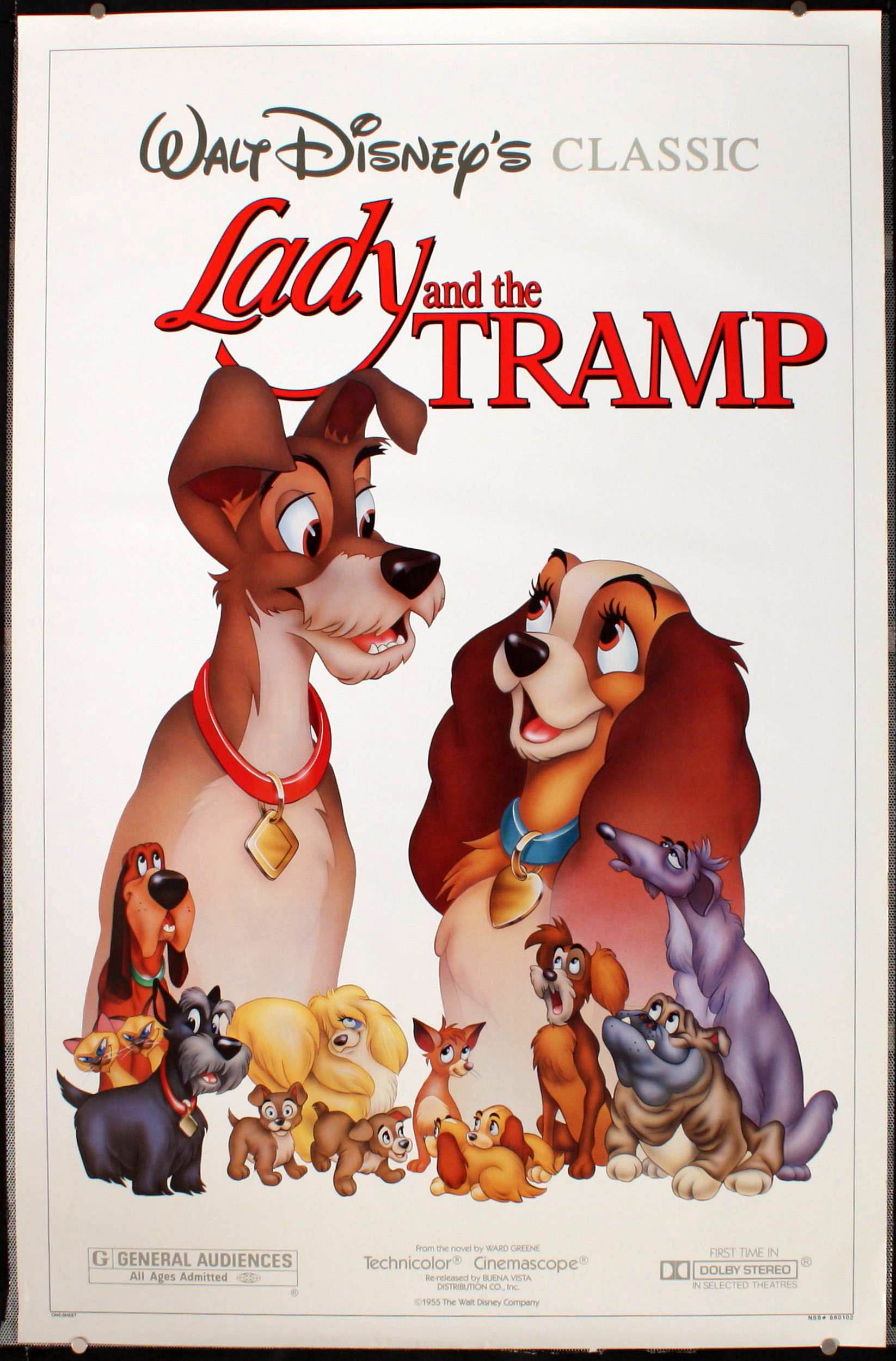
It is fitting to start with Lady and the Tramp, because not only is it bookended with Christmases, but it’s the first movie I had growing up. I don’t remember a time with it as the only tape, and there were others more important to me later, but this was the first.
As the first, it inspired the house rule that we could only watch a thing once a day, for my parents’ sanity. It is a rule I’ve long internalized, though occasionally I’ll break it and rewatch something brand new to me within a few hours. It still did not save the tape, which was the furthest gone by the time we gave up on the Betamax player.
Obviously, I remember the love story the most, but there’s quite a bit of adventure gotten up to that certainly appealed to me. But at the start, I think what was important to me as a very young child was that it was about dogs and it was a cartoon. It never mattered to me that it was about a girl dog, or that it was a love story. Maybe I was more invested in the male characters that are pretty much every other dog, but nobody taught me to be afraid of “girls’ stories” at that age. Kids will be happy with any well-told story until they’re told why they shouldn’t be. Later, I remember being embarrassed about how interested I was in seeing Pocahontas, but that was when I was older and more socialized.
I reached a point in my early teens when I noticed that there were several movies I’d seen so often that I was just letting them wash over me without thinking much about what was going on. Perhaps that awakening to analyzing what I was watching was the beginning of what I do here.
Coming back to this I think I’ve spent long enough away from it to break out of that old brain dead habit, but even so, there’s plenty of new things to notice and appreciate. I never really gave much thought to the human story going on, with the growth of Jim Dear and Darling’s family, as more than how it affects the dogs. I never considered how much the dogs’ story is rooted in the real lives and mannerisms of dogs as understood by humans. This is every moment familiar and every frame new.
I only very recently, perhaps in the last year or so, learned that this movie is a direct reboot of the Universal Monsters version of Mummy lore. The original Universal Mummy may have greatly influenced popular perception of mummies, but it’s perhaps the most generic legend in the franchise. Even werewolves, which are perhaps more independent, have a greater connection to The Wolf Man than mummies.
Additionally, I always thought of this as a fantasy action film, while the 30s film is, like the rest of the 30s and 40s films, definitely positioned as horror. Perhaps the genre shift accounts for the unpopularity I perceive this movie to have, though I’m not sure it’s actually all that unpopular, considering it had a handful of sequels and starred Brendan Fraser at the height of his fame. On the other hand, maybe the sequels are on the strength of the overall franchise. I may understand better after watching.
I am really over zombies as a pop culture phenomenon. They’re here to stay because the only two kinds of enemies you can kill without offending people are Nazis and zombies, and you can justify modern-day or future zombies much more easily than explaining why there are Nazis in orbit around Regulus 9.
I’m more into vampires (kind of surprising, given my politics), but the thing is, I’m kind of attracted to the idea of being a vampire, while nobody wants to be a zombie. People want to be Survivors of the Zombie Apocalypse. I want no part of that scenario. I’m not entirely happy with my civilization, but I like it much better than none at all. Also I’d die in the first ten minutes of the movie.
However, this is the seminal zombie movie, and even Mister Rogers enjoyed it. Like last week’s movie defined vampires in cultural consciousness, this movie invented what we think of as zombies. Without even using that word. It hijacked the word in our culture, and now it means George Romero’s undead monsters. So that has to be of value.
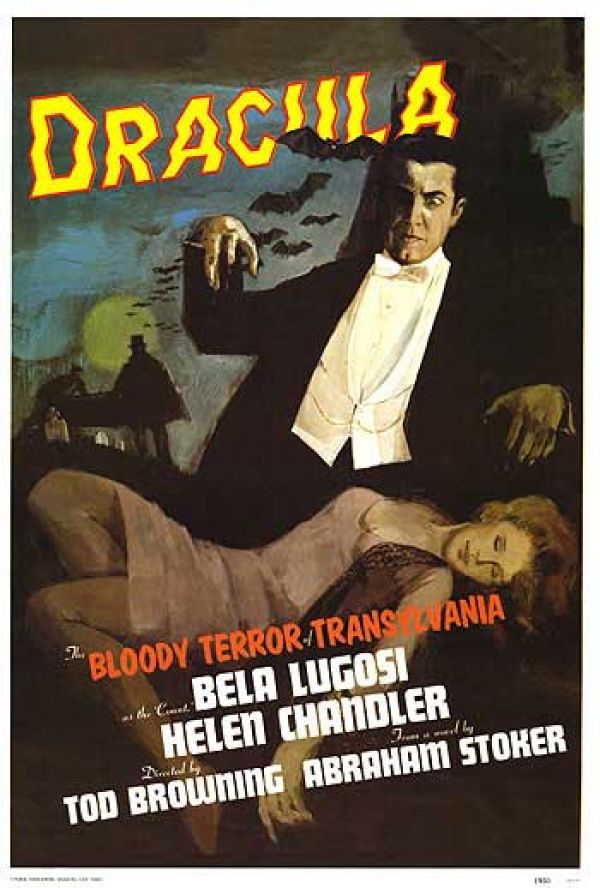
The Ur-vampire story. Everything classical vampires are comes from this movie. While the movie is based on a book, the movie has more range and probably took some liberties.
I’m not sure I’ve ever directly experienced Dracula played straight, not in parody or playing off the legend as “another monster/baddie”. By pop culture osmosis, I think I have a basic understanding of the plot, but there could be something new to me here.
This movie made Bela Lugosi and Dracula inseparable. I’ll definitely be looking out for how much of that is from the performance and how much from the popularity of the whole film.
Similar to how the Batman franchise spun off Catwoman, after three Christopher Reeve movies, the Superman franchise spun off Supergirl. However, while Catwoman was basically made because the next proper Batman movie was in development hell, my understanding is that Supergirl was a pure spinoff attempt riding on the success of Superman. While Catwoman is generally considered awful, it was followed by the acclaimed Dark Knight Trilogy, and I get the sense Supergirl is considered okay but forgettable, and it was followed by Superman IV.
I know exactly what to expect from the plot because this is the introductory movie of a superhero, which has been required to be the rote origin story for around 40 years, if not longer. As for a villain to slot in, I’m not sure what to expect, since I don’t know of Supergirl having any villains that are “hers”. I’m really not that familiar with her at all besides the basics of her relationship with Superman, so maybe I won’t have lore bogging down my enjoyment.
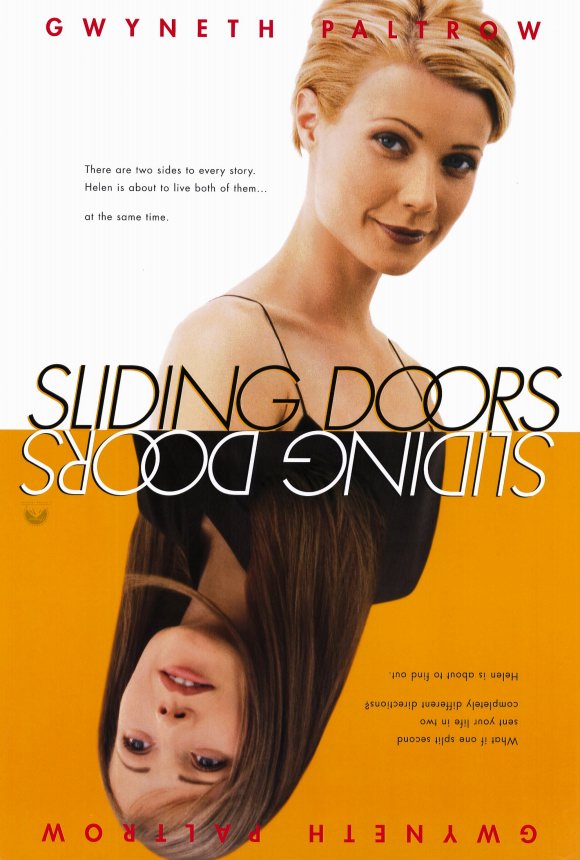
Exploring parallel outcomes of a small change in one’s life is hardly a unique source of plot, especially since Many Worlds Theory entered popular consciousness. Malcolm in the Middle did an episode on what would happen depending on which parent chaperoned an outing, one of Community‘s most popular episodes traces seven different continuities, Mister Nobody follows a mind-bending number of possibilities, and Constellations recently began a Broadway engagement, just to name a few, and completely ignoring the countless examples involving time travel. However, there are two films that are always held up as the chief examples of the concept: the German film Run Lola Run, and Sliding Doors, both of which, interestingly, released in the same year. Perhaps that’s a part of why they both resonate so strongly.
I encountered Run Lola Run first, so I’ve always seen this as the English-language derivative. I expect it to be less experimental in technique and so more accessible, but that’s dangerously close to snobbishness. This is still an experiment in stepping outside traditional linear story, and highly regarded as such, for reasons I’ll now get to experience.
I’m not sure if Matilda is intentionally being invoked by the posters, or if it’s more of a coincidence of starring Mara Wilson and having a 90s “whimsical fantasy” aesthetic. The story isn’t much like Matilda at all really.
Anyway, the poster design wouldn’t have gotten me interested (I think I liked Matilda, but if I wanted to see it again I could just see it again. Actually, I ought to see it again), but it’s again in the big, cheap collection of movies I recently got, and the description on IMDB shows potential. But what really got me interested was the tagline. “Anabel made a wish. Murray made a mess.” That’s almost certainly an oversimplification, but it suggests a fun, haphazard style of accidental magic.
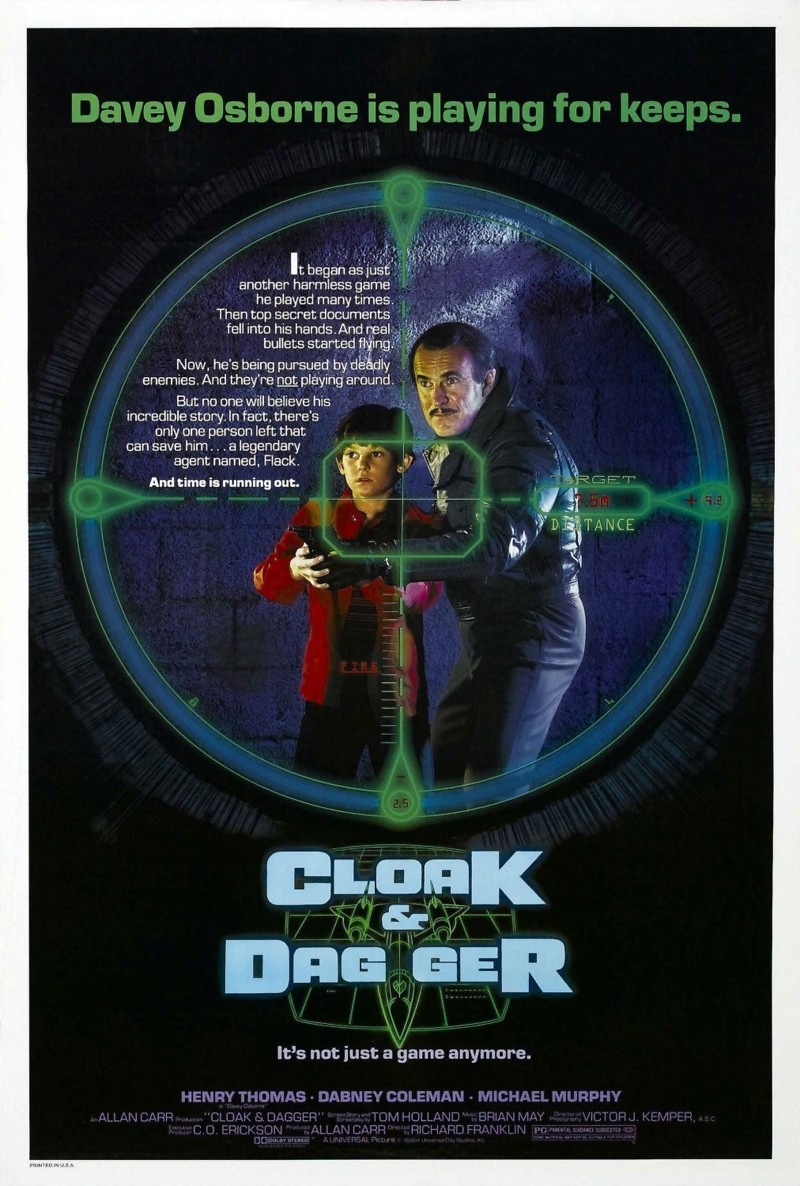
I came across this in a 10-movie collection of cheap “family favorites” I bought with a Christmas gift, and I’m a little confused by the plot summary. The neglected kid’s video game hobby and superspy imaginary friend both figure prominently in the description, but I don’t see how video games enter into where the twist takes them, other than providing a setup for how to get there. This might just be the kind of weird concept that’s surprising to think it got made.
Dabney Coleman wouldn’t be the first person I’d think of to play a superspy, but he does seem quite appropriate now that I see him here. It’s not exactly the type I know him best in, but I can picture the role as something similar that he’d be quite capable at, or he could surprise me.






 Yesterday's Movies