I didn’t know this movie existed before I decided I wanted to collect some disaster movies. It’s about a volcano erupting under Los Angeles. Tommy Lee Jones is in it. I don’t really know anything else, so I have nothing to say and I’m basically going in cold. Saying anything else would be padding out this section to try to get it closer to the height of the movie poster, which is just not going to happen this week because I have nothing else to say.
Romy and Michele’s High School Reunion. Touchstone Pictures 1997.
Before watching the movie:
This is probably a surprise entry for the month. I always wanted to include Romy and Michele and I’m not sure why they came to mind with the others. Possibly because one of the most notable images associated with the movie is the two women in a convertible, something also strongly associated with another iconic title duo.
I first learned of this movie’s existence from a podcast interview with Kudrow, who discussed how she’d done a pilot based on a play she’d been in that didn’t get picked up right before she got cast in Friends, and if that pilot had sold, then Friends wouldn’t have happened for her, but without the success of Friends, this movie based on the same characters from the play wouldn’t have gotten made. I have the vague idea that it’s about the pair realizing on the occasion of their ten-year reunion that they haven’t made much of themselves, but I don’t know much more and I’m mainly drawn to it because of how much it seems to mean to the actors and to the cult fanbase.
This is a movie I was shown in high school as part of a discussion on genetics. It was a non-standard interdisciplinary class in literature and science that used sci-fi as a jumping off point to discuss scientific concepts and ethical dilemmas, and one of my favorite classes even before factoring it that it was taught by a teacher I already knew and liked well.
In a future where genetic engineering and sequencing are commonplace, few are conceived naturally, without the opportunity to screen candidate embryos for genetic diseases and make enhancements for superior abilities. Vincent Freeman was conceived the old fashioned way, and his genes mark him as an incredibly fragile and deficient “in-valid”, projected to die of a heart defect in about 30 years. Ubiquitous genetic testing and identification means that he’ll never be allowed to pursue his dream of going to space on his own identity, but a black market dealer in “borrowed ladders” connects him with Jerome Morrow, an English swimming champion now paralyzed from the waist down, who looks similar enough that, with help from daily samples of bodily fluids and studious replacement of any of Vincent’s own dropped hair and skin cells with Jerome’s, Vincent is able to fake his way into Gattaca as a mission navigator for an upcoming flight to Titan. Then, a week before launch, an administrator is murdered in the offices and the police find a hair on the scene that identifies as belonging to Vincent, an In-Valid unauthorized to be there, leading the police to start combing the facilities for an impostor among the Gattaca elite.
What stayed with me the most the first time around was how mundane the space travel was. These astronaut candidates are working at a desk in suit and tie jockeying in the bureaucracy until the launch day. I don’t really understand how Gattaca works as a business either, as it’s not clear why they do what they do. They just send rocket after rocket every few hours and I don’t think it’s ever explained. The focus is meant to be on the total genetic surveillance, but as a certified Space Kid, I just had questions about the space program, and I still do.
What struck me this time is how all of the Valids are always wearing immaculate suits, except for when doing the physical training for missions. I suppose this is meant to visually signal class, since most In-Valids we see are in coveralls even when not working, but it seems a bit silly to me that we never see the real Jerome wearing anything other than a perfect three-piece suit even though there’s only one scene where he’s left the house. By all means, his attire is justified when Vincent takes him to the speakeasy for people involved in black market genetics, but most of the time he’s just collecting samples of himself and generally living as much of a leisurely life as he can from a wheelchair, hiding from the world because he’s renting his identity to someone else and ashamed of his lost potential.
It is altogether very striking now, the retro design of the movie. The clothes lend a Film Noir feel, even though the cars are more based on midcentury models, with electric motors dubbed over. The detectives pursuing their hunt for the impostor at Gattaca is even more Noir.
However, I also have much more perspective on the discrimination shown. The warnings of a divide between the technological haves and have-nots I encountered in the 90s and early 2000s seemed academic at the time, but the realities are becoming clearer as we become more connected and more aware of what we’ve given away to big companies, in the technology sector and otherwise. I see that a lot of the criticism directed at the movie by geneticists is that Gattaca has a right to screen astronauts for perfect health, and that’s fair. It’s even reasonable for Gattaca to use genetic samples to identify who is and isn’t authorized to be in certain areas (this surveillance seems omnipresent, but I think that’s because we only see Gattaca and the police). But it’s missing that the only jobs that people without flawless genes can get are unskilled, low-paying labor because every single company wants to use genetic screening to deny jobs for the slightest flaw, and will flout privacy laws by quietly stealing samples from licked envelopes, doorknobs, handshakes, anything they can get.
It doesn’t matter if geneticists say that markers of likelihood for abnormalities are not guarantees, it matters that the employers and insurance companies believe in genetic determinism, or at least find it convenient for the discrimination they want to justify. Throwing away perfectly good applicants based on bad genes isn’t much different than throwing away resumes that were only evaluated by an algorithm or refusing to allow good people without the right government documents to enjoy the full opportunities of the society they live in and contribute to. The ingrained prejudices in the world presented are enabled by genetic technology, not created by them, much like how the disaster of Jurassic Park is caused by hubris and greed that happened to allow resurrected dinosaurs to escape their containment.
This movie is visually striking, narratively compelling, and obviously opens doors to conversations, making it a clear choice for my ethics class. This fully realized vision is probably going to be the definitive take on genetic dystopia for a long time.
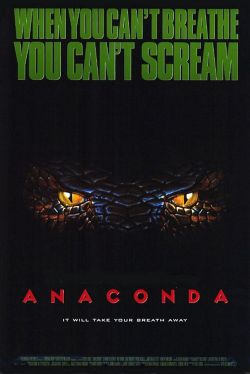
Well, here’s a “scary animal is the monster” horror movie. Comparing it to Jaws is easy. Probably harder to compare to Arachnophobia, even if I did remember enough of it to do that. In this case, it’s a documentary film crew stuck on the Amazon getting picked off by some guy’s scaly White Whale, which is a somewhat interesting angle to get into the story through. It would probably be most interesting as a pure found footage movie, but even though this was about the time that Blair Witch proved that could work, I don’t expect that will be the case.
The cast is particularly eclectic. I started thinking that when I saw Ice Cube featured prominently, but also how often do actors like Jon Voight and Jonathan Hyde mix with Owen Wilson and Jennifer Lopez?
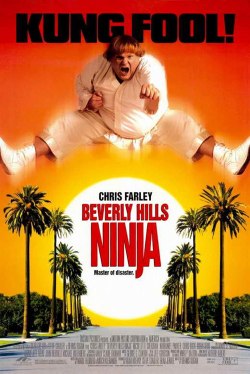
I think I only just realized how commonly “Beverly Hills” is used as an adjective meant to evoke something in the vicinity of “spoiled rich white people”. As someone who grew up only vaguely aware that Beverly Hills is a neighborhood in California, (Beverly Hills 90210 was popular in my childhood but I have seen zero seconds of it and didn’t even know what it was about) I never really picked up on a deeper meaning. I was most aware of The Beverly Hillbillies, and it took a long time to click with me that the town itself was supposed to connote the richest of the rich and the family wasn’t just in the richest neighborhood in your typical town.
I would really like to see this movie do a little more with Farley’s character than have us point and laugh at him for the whole run. However, I don’t have high hopes for him to have much dignity. Maybe at best, this can be something that Kung Fu Panda owes a lot to while improving upon it.
I very vaguely recall a movie with this title being around back then, but I don’t remember anything about it. I didn’t even remember it was one of the movies they tried putting Matthew Perry in.
I see it’s another movie titled after a song they can easily license. It could be a direct reference to the proverb, but as it’s a love story, it’s going to be a reference to the love song.
I definitely did not know this is about a rushed relationship between an American guy and a Mexican woman and the problems created when their lives and families catch up with their choices until now.
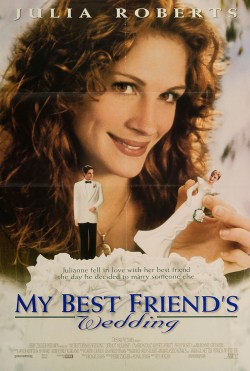
My best Friend’s Wedding. Predawn Productions 1997.
Before watching the movie:
I’ve been dimly aware of this as a relatively standout romantic comedy for a while, but I never really looked into it much. The idea of having to watch an old flame get married and how one copes with that is interesting, but as a romcom I don’t know if it’s going to have the kind of message I think would be more appropriate or if the old flame is going to leave the bride because true love.
Julia Roberts and Cameron Diaz are like two different generations of romcom royalty and it’s a little odd they’re cast opposite each other. Dermot Mulroney is a name I’ve seen around from time to time but even looking over his filmography I cannot remember seeing him in anything, and he looks like a stand-in for whatever more recognizable actor they actually wanted. I guess I’ve seen Rupert Everett in things other than Inspector Gadget, but that’s the only thing I ever think of for him.
I haven’t been able to laugh at the presidency in years. At least, not as the product of something other than a mixture of horror, anger, and embarrassment. Washington/the Federal Government lately hasn’t been a source of cynical guffaws. But things have changed and there’s room to be relieved and somewhat relaxed again. For the foreseeable future, we’re returning to, at worst, garden variety corruption and only casual imperialism.
This movie came to me in a presidential-themed movie collection that I found when looking for a disk-based replacement to an old VHS copy of Dave, a favorite I’m looking forward to returning to soon, and could get a Movies of My Yesterdays if “soon” is not all that soon.
One thing I recall about the circumstances of the George of the Jungle release was that it seemed to come out at about the same time as Disney’s Tarzan, but apparently this actually predates it by two years. Given what I know about animation production schedules, Tarzan was probably already in the works when they started on this, but just came out later. I now recall that it wasn’t until the direct to video sequel that they were able to reference Tarzan.
However, this was definitely part of a wave of Jay Ward cartoon adaptations made in the late 90s. As much as I like 2000’s The Adventures of Rocky and Bullwinkle (so much so that I did a redub of a sequence for college mainly because I thought there was a bad music decision that I wanted to fix. How did it go? Okay enough.) and Dudley Do-Right, I think this was the best of the bunch. Though it’s possible that’s just because I never saw any of the George of the Jungle cartoon, so I don’t know how badly it was changed. That didn’t stop me from loving the Inspector Gadget movie though.
George of the Jungle. Mandeville Films 1997.
Fabulously wealthy San Francisco heiress Ursula Stanhope has come to Burundi to explore the jungle, but is surprised when her equally rich but pompous fiance Lyle Van De Groot tracks her down and joins her expedition, insisting they should return home as soon as possible for the wedding. Lyle has been accompanied by two poachers who are after the White Ape, a legend of the Burundi jungle that could get them a fortune. In reality, the White Ape is actually George, a human who was lost in the jungle as a baby and raised by apes, and now is the King of the Jungle. When Lyle and Ursula are attacked by a lion, Lyle tries to abandon Ursula and run away, and George swings in to save her, bringing her back to his treehouse to help her recover from the shock. When Lyle and the poachers find Ursula and George’s treehouse, there’s an altercation that leads to Lyle accidentally shooting George, leading Ursula to bring him back to San Francisco for medical care. Having seen Lyle for the selfish coward that he is, next to the humble and gorgeous hero George, Ursula now finds herself with questions about her future, much to her status-obsessed parents’ chagrin.
Maybe this is again because I’m not familiar with the source material, but it still feels like this movie more naturally adapted to modern styles than the other cartoon movies I named above. It’s a cartoonish slapstick farce with a lot of self-aware commentary, sometimes even not delivered through the narrator, but it meshes with the 90s writing aesthetic somehow. George is a timeless klutzy hero, but Dudley is a relic of a different era, and Rocky and Bullwinkle spend their entire movie commenting on how they’re 30 years behind. The narration is really the only anachronism I can find in this movie, and the Narrator is a comic character in his own right.
There were things I was expecting in this movie that I guess I was remembering from the sequel. This is entirely in the jungle and in San Francisco (because the Americans won’t be interested if we don’t take the hero to America), except for a tag with Ape in Las Vegas, and I think I was remembering more scenes in other locations that are probably from the plot of that movie.
I still like this movie as much as I did then. The naked product placement was more noticeable now, but it didn’t bother me because it was often the joke. This is my favorite Brendan Fraser movie, and he did some great work in the 90s and 00s. George of the Jungle is a friend to you and me.
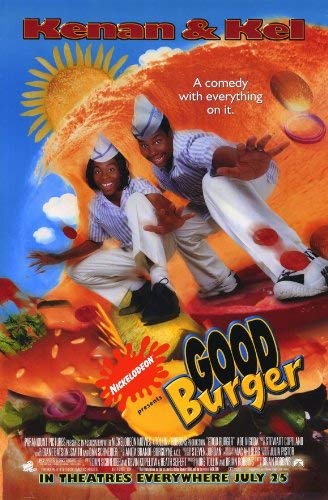
I always thought this was the movie of a series, but it turns out that this is the expansion of a recurring sketch from All That. Keenan Thompson and Kel Mitchell were Keenan And Kel on a completely different (eponymous) show, and Keenan’s character in this movie was not in the All That sketches. All of this just goes to demonstrate that while lots of kids my age were watching All That and Keenan and Kel, I didn’t have Nickelodeon.





 Yesterday's Movies