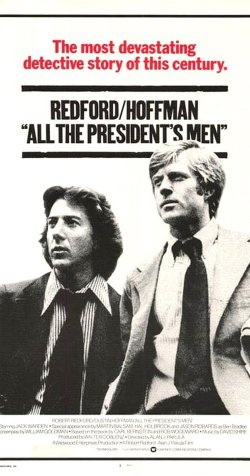
All the President’s Men

All the President’s Men. Wildwood Enterprises 1976.

Before watching the movie:

I’ve always felt that the Watergate wiretapping investigation was the single moment that America lost popular faith in its government. Perhaps that’s a naive view of history before it. Certainly the Vietnam War was a black eye for the nation. And I know there were other scandals gaining headlines between the Civil War and the Great Depression. Not long ago I covered a movie about political corruption from the 30s.

I will certainly grant that corruption has been around as long as there has been power to abuse. But if I had to point to one reason why pretty much anyone will tell you they’re all crooks in Washington, I’d say it was the CREEP coverup revelation. That was, in my mind, when the spin broke down and we saw the President’s New Clothes. The day a sitting president resigned in disgrace to avoid impeachment was the day we stopped believing that as a whole, our leaders had our best interests at heart. At least, that’s the narrative I’ve developed as someone who was born almost two decades later, having lived in a world where no substantiated political scandal has yet compared.

After watching the movie:

When the Washington Post’s newsroom signs young reporter Bob Woodward to cover a burglary at the Watergate hotel, it’s a simple police story. But as he covers the legal proceedings, he finds that they were assigned counsel but turned out to have private counsel they couldn’t have had a chance to hire themselves. Following that mystery leads to uncovering a meeting with a someone who works for the Special Advisor to the President. As the story grows, younger Carl Bernstein joins with Woodward to help pursue and report the case. Everything about it indicates deep corruption, but no source will go on record, and hardly anyone will give any information at all. There are plenty of hints that this is something big, but hints and hearsay don’t make concrete journalism, and the harder they push, the higher the pushback comes from.

This doesn’t play much like a movie. It’s more a methodical presentation of events. It seems almost as clinical as the case studies Sherlock Holmes would prefer Watson write. Despite dealing with the very heart of what makes our free society work, there’s next to no emotional investment asked for by the narrative. The duo fight through cold trails to get their facts, but we don’t get any kind of personal level of narrative conflict, just the professional challenge. This is almost excusable by the fact that we as the audience know how things turned out.

The end seems very abrupt. I’d consider the story beat it concludes on to be the beginning of the third act. After a major reversal, they get back on their feet and roll up their sleeves… and then it’s over, and all their vindication comes from an epilogue told in headlines. Perhaps this decision came from realizing the movie was already reaching two and a half hours in length.

Perhaps due to the limitation of scope of the story told, there doesn’t seem to be time in those two and a half hours to really explore the gravity of just how big the conspiracy was. It’s a gut punch to learn how much of the government was in on the election interference, but then everything wraps up with all the mess of that handled off camera.  This further leaves the impression that nothing really matters in this movie about uncovering very important things.

Ultimately, this story isn’t as concerned with the erosion of democracy as it is with journalistic integrity. Journalists will say that journalistic integrity is key to democracy, but in this case, the report could only be made after the damage had been done. The scheme worked, all the papers could do was refuse to let it stick. And by the narrative shown here, even that was a long shot.


Yesterday’s Movies receives support on Patreon.
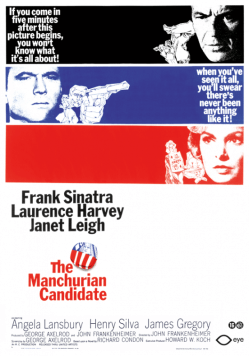
The Manchurian Candidate (1962)

The Manchurian Candidate. United Artists 1962.

Before watching the movie:

I think I’ve heard once or twice that Frank Sinatra stars in this, but I forgot it. It’s still strange to think about him as a legendary actor as well as a legendary singer.

There was a remake in 2004, which was probably the wrong time for a remake. I wonder if anyone with say-so is considering making it again. Some would argue it’s being remade right in front of us.

Continue reading

Judgment at Nuremberg

Judgment at Nuremberg. Metro Goldwyn-Meyer 1961.

Before watching the movie:

I don’t really get why trying Nazi war crimes can fill a whole three hour courtroom drama, but the reason I don’t is probably why it needs that much time.

This film is indirectly responsible for my initial awareness of Spencer Tracy. In order to talk William Shatner into allowing himself to age publicly, Tracy was used as an example, and turned out to have been one of Shatner’s personal icons, having worked with him on this very movie. As much as I like Star Trek, I find Tracy’s performances very likeable for an entirely different reason from why Shatner is fun. Continue reading

Mr. Smith Goes to Washington

Mr. Smith Goes to Washington. Columbia Pictures 1939.

Before watching the movie:

So, the underdog political fable. The everyday guy who comes to Congress and fixes corruption with dogged determination and fillibustering. What’s sad is that it seemed plausible then, but not anymore, and the fillibuster it hinges on is now a tool of the kind of problems this movie wants to fix.

That’s the reputation, anyway. The changed political landscape is why I’m not sure I’ll get out of this movie what was intended. Continue reading

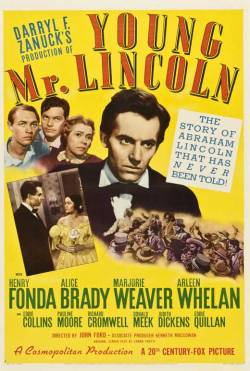
Young Mr. Lincoln

Young Mr. Lincoln. Twentieth Century Fox 1939.

Before watching the movie:

Okay, here’s one I’m completely unfamiliar with. It just came up in algorithmic suggestions, and I’m not really sure what to make of it. It occurs to me that in 1939, there were probably still people alive who had seen the Civil War, perhaps even usefully remember it.

I would not be surprised if this is a mostly fictional story suggested by Lincoln’s career as a lawyer. It looks on the surface more like a piece to venerate him than to explore a historical event worth exploring, but it’s going to be interesting to see how the late 30s remember one of our most notable presidents.

Continue reading

License to Drive

License to Drive. Davis Entertainment 1988.

Before watching the movie:

I am aware of the Two Coreys heartthrob duo of the 80s only through discussion of them, as they were just before my time (I was dimly aware that Jonathan Taylor Thomas was a big deal a decade later).

This is looking suspiciously like “Ferris Bueller, but with the Coreys instead of Matthew Broderick”, though I’m still interested. The car wasn’t a very big part of Ferris Bueller, whereas this could potentially be a road trip kind of joyride.

Continue reading

Move Over, Darling

Move Over, Darling. Melcher-Arcola Pictures 1963.

Before watching the movie:

I’ve been holding onto this for a long time because it looked fun, but I wasn’t sure if it was actually a theatrical movie, and also it’s a remake of My Favorite Wife, so I really wanted to do it, but I wasn’t sure it would be a good fit. But I have established that it was a feature, so I’m going to cover it now.

This is built on a thorny relationship question, which I think might shift slightly from the 40s to the 60s to today. Nobody’s wrong, but how do they make it right?

After watching the movie:

Five years after his wife Ellen went missing in a plane crash, Nick Arden has her declared legally dead so he can marry his new love, Bianca. The very same day, the Navy rescues Ellen from the tropical island she’d been marooned on, and she returns home to learn her husband is leaving for his honeymoon. Ellen’s mother in law Grace conspires with her to get her to interrupt Nick and Bianca’s honeymoon so Ellen can have her family back. However, while Nick is overjoyed to be reunited with Ellen, he dreads breaking the news to sensitive and moody Bianca. Now Ellen is furious that Nick won’t get rid of Bianca, and Bianca is furious with Nick for sneaking around instead of giving her a wedding night, and then, just so Nick won’t be left out, he learns Ellen wasn’t alone on that island.

It’s not entirely correct to say that nobody’s wrong. Nobody is at fault for the creation of the situation, but everyone takes a share of extenuating it. This is one of those stories that runs on people not talking to each other, but it’s also people who won’t be talked to. As reluctant to brooch the subject as he is, Nick does try to do so, just as gently as one would expect him to deliver a disappointment to his bride on the special day. Bianca just won’t let him reach his point. Ellen’s jealousy and impatience is also understandable, but she keeps interrupting the process. Watching people who not only won’t talk to each other but can’t talk to each other is often like drowning, but it’s very fun downing done well, and this is a delightful mix of a whole lot of different kinds of comedy on the way to nobody admitting anything to anybody.

I’m sure I’ve seen the hotel manager in a lot of 60s movies and possibly TV. He seems to play disapproving waiters and authorities a lot in the 60s. Don Knotts also has a guest role in a couple of scenes, mostly in the same vein as his usual type, but without any pressure to be a hero. The judge at the beginning and end is unfamiliar, but he steals the show.

It’s a thorny problem, but the real world solution wouldn’t have so clean a break with one woman. This falls into the trap of a lot of the movies where building up the case against the wrong partner leaves a character that doesn’t seem to have any business being with the one forced to choose. It could also have left it at neither, but then the happy ending would need even more help.

The ride of this movie makes up for a lot of logical problems. The writing and performing is funny, so what else does it need to be? As long as the journey is enjoyable, the map doesn’t need to make too much sense.

Yesterday’s Movies receives support on Patreon.

Two Weeks Notice

Two Weeks Notice. Fortis Films 2002.

Before watching the movie:

Despite both of them having a good track record in romantic comedies, I would never have thought to pair Hugh Grant and Sandra Bullock. However, it makes perfect sense to set up a chalk and cheese couple, which are in fact a staple of romantic comedies.

It’s interesting that this movie appears to start from a position of realizing their relationship needs to either improve or end, which is usually the crisis point of the plot. I’m picturing something close to a plot where the bad boyfriend who’s usually there to get dumped in favor of the love interest, tries to reform into the love interest.

After watching the movie:

Lucy Kelson is an activist lawyer, as likely to organize a protest rally as file a suit in her fight against injustices. While crusading to save a historic Coney Island community center, planned to be demolished as an eyesore for a planned luxury condo tower nearby, she charges up to George Wade of the Wade Corporation development group, one of the bidders for the building contract, to make her argument, which among other things, includes a guarantee that she can get Wade the job in exchange for an agreement to spare the community center. Her eloquence and skill impress George, whose brother and senior partner Howard has demanded he get a real legal counsel this time and not another mistress to payroll. George offers Lucy the position, noting that not only will he spare and work around the community center in return, but the job also comes with full control over Wade Corporation’s pro bono legal budget. After some handwringing over this deal with the devil, Lucy accepts. Unfortunately, George quickly comes to rely upon her for every decision except legal matters, at all times of day and night, and after several months of this, Lucy resigns, which George reluctantly accepts, only on the condition she locate and train her own replacement. Only now that the process of separation has begun, they find that perhaps neither one of them can stand to see the other go.

I thought this story was going to avoid the stable, boring current partner that needs to be dumped for the romantic interest, but interestingly, Lucy does have a current partner that exits in the third act. Only he never actually appears because he’s always on a boat somewhere in another part of the world, and we only hear of their breakup after the fact.

I came into the story expecting her resignation to be the inciting action, but it’s actually more of the turn into the second act. I probably could’ve enjoyed an entire movie of the misadventures of falling in love with a clueless and needy boss, but they only really start to notice each other as people when they begin to disentangle as coworkers. Which is also enjoyable, just in a way that leaves an obvious joint.

Despite doing some unusual turns on tropes, this is a fairly standard romantic comedy. Witty things get said, arguments are had, feelings get developed, hidden, and revealed, and ultimately, the formula plays out in the manner the audience is accustomed to, and an hour and a half is passed in fun but not very distinctive storytelling.

Yesterday’s Movies receives support on Patreon.
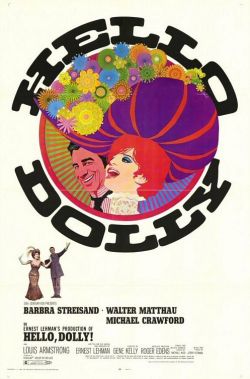
Hello, Dolly!

Hello, Dolly! Chenault Productions 1969.

Before watching the movie:

I’m sure there are other movies that reach this level of substanceless fame, and probably ones that I’ve reviewed here before, but while I know I’ve reviewed well-known movies nobody actually seems to discuss the content of before, I can’t think of one so big yet so mysterious.

I roughly know its time period, but mainly because Wall-E used some clips. Otherwise, it’s somehow the codifier of what a classic musical film is, to the point that it’s taken as a generic for “musical”. But it’s theoretically in that position because it’s good and because it’s influential. But the mold got overused and eventually musicals started defying it. Later on Broadway reinvented Disney reinvented Broadway, but that’s beyond the scope of a review of Hello, Dolly! Continue reading

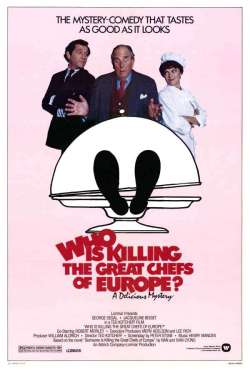
Who is Killing the Great Chefs of Europe?

Who is Killing the Great Chefs of Europe? Lorimar Productions 1978.

Before watching the movie:

I don’t remember how I originally came across this movie. Maybe I was looking up Robert Morley, maybe something else referenced the title, I don’t remember. But I do know that when I heard the title, I had to look it up to see if it was a real movie. And then I read the description and had to see it. And then it was not available online, so it ended up being a Christmas present. Which I am now watching.

I look forward to a globetrotting romp through culinary masterpieces, and also murder.

Continue reading