Once again, this movie is not in the public domain yet, but thanks to being based on a stage musical, the score and song lyrics are. Though apparently not the script of that stage show, which I don’t know the legal mechanisms behind. Aside from Marx Brothers Vaudeville schtick, I don’t really know what to expect here.
When I think “Animal Crackers” and musical, I think of the song made famous by Shirley Temple, but it seems not even the song is here, let alone Temple, so I’m already going in a little disappointed.
It seems strange that works entering the public domain is now an annual thing, as it’s been frozen for most of the part of my life I was aware of such matters. Is this really the sixth year of welcoming new works into common ownership? It seems like only the third, but I distinctly remember being inspired to cover Safety Last! because its copyright was expiring and that was indeed 2019. I’m going to be exploring the Public Domain Class of 2024 this month. Not every movie will itself be owned by the commons, but there will be a connection in every case.
I remember enjoying Modern Times, The Great Dictator, and to a lesser extent, City Lights (which I remember more as good cinema than good comedy), but I’m not sure I’ve ever really considered Charlie Chaplin a favorite, aside from the speech at the end of “Dictator”. As he’s one of the early film personalities that were bigger than their films, all of his works seem to blur together for me, and I’m not as motivated to see a Chaplin film as some others, so I didn’t even know this existed before it came up as among the most celebrated works whose copyright expires this year. I don’t even know what to expect other than “probably Tramp antics.”
Romy and Michele’s High School Reunion. Touchstone Pictures 1997.
Before watching the movie:
This is probably a surprise entry for the month. I always wanted to include Romy and Michele and I’m not sure why they came to mind with the others. Possibly because one of the most notable images associated with the movie is the two women in a convertible, something also strongly associated with another iconic title duo.
I first learned of this movie’s existence from a podcast interview with Kudrow, who discussed how she’d done a pilot based on a play she’d been in that didn’t get picked up right before she got cast in Friends, and if that pilot had sold, then Friends wouldn’t have happened for her, but without the success of Friends, this movie based on the same characters from the play wouldn’t have gotten made. I have the vague idea that it’s about the pair realizing on the occasion of their ten-year reunion that they haven’t made much of themselves, but I don’t know much more and I’m mainly drawn to it because of how much it seems to mean to the actors and to the cult fanbase.
When I was in middle school, I was obsessed with watching Michael J. Fox’s whole filmography for a while and I missed this somehow. I first remember learning it existed by finding it in a roommate’s DVD collection, and I never got around to it. I also got it confused with Fright Night a few times.
Eventually I found out it was a Michael J. Fox comedy and I still never got around to it. I’ve read the summary at least once and completely forgotten it every time I read it. At least twice, I got as far as saying, “yes, I will watch this movie” and then I saw this poster and thought maybe it was a more serious horror movie than I’d thought, and decided to pass.
I remember when this movie came out and being mildly interested but not very motivated to see it. It looked like an attempt to make another The Nightmare Before Christmas. And then I found it in my roommate’s open use DVD collection and thought maybe I’d watch it, but then maybe it would be good to blog about, but it would be a while before it would be old enough to cover.
And then I didn’t watch it, and about I moved out of that apartment, and then about ten years happened and I’m still blogging, so here’s my time to review it.
I may have encountered this in some dusty streaming back catalogs or cheap collection of classic movies, but it didn’t appeal much to me on the face of it. Much more recently, I learned that it’s the source of the tongue-twister scene I think I saw in an AFI special about “the pellet with the poison is in the vessel with the pestle”, which I always wanted to find. The climactic swordfight is also highly praised by fight choreographers, I believe coming behind few other than the famous Princess Bride duel.
I’ve seen a few other Danny Kaye movies, but I only just now realized I might have been confusing him with Dennis Day occasionally. Kaye seems to be someone who used to be much more appreciated, but has been forgotten since the New Hollywood revolution.
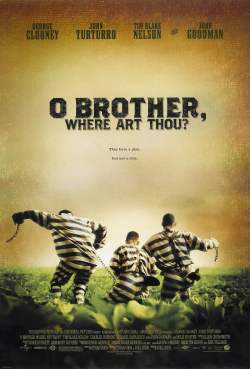
While I first watched this movie in high school, I think 9th grade English, it also has significance to me as the reason, or at least the excuse, to get Netflix. I had an assignment in a media class to analyze a scene and my group got O Brother Where Art Thou? and I used a free trial to get us a copy of the movie faster than the library could get it to us. That subscription back in the day made catching up on all the movies I’d never gotten around to possible, and while I was doing that and having opinions on them, I was looking for a creative project to put on the internet because I was also really getting into the heyday of webcomics. I didn’t think I was up to drawing a regular strip or making videos on a sustained basis at the time, but I could watch movies, have opinions, and share those opinions.
I’m glad to be able to say that in almost fifteen years, I’ve had something online every week, and I think I can still count on one hand the number that were just apologies for not even having old posts to recommend. I had a review online every week during a month where I had a full load of classes, a part time job, an assignment to write a novel in a month, and a weekly video series for my sketch comedy group’s blog. I got something up in weeks when I was moving all by myself and didn’t have internet service set up yet. I don’t remember what it was but I got something up the week I got married. I wanted to prove to myself I could stick to a posting schedule and it’s only in the last few months that I’ve had to evolve from staying up late on Thursday night to have something for Friday to writing over the weekend to have something by Monday. I’ve seen great movies I might not have gotten to without this push, and I’ve had a good excuse to rewatch movies I already loved and share why I love them.
Ulysses Everett McGill, a man with the gift of gab, leads his fellow convicts Pete and Delmar in an escape from their chain gang with the story of loot from a heist that he buried back home in a place that will be flooded to build a dam in just a few days. They go to Pete’s cousin for help, who immediately turns them in to Sheriff Cooley for the bounty, barely escaping the barn Cooley’s men try to burn them out of. Picking up hitchhiker Tommy Johnson, who says he sold his soul to the devil for guitar talent, they stop at a radio station where “a man will pay you to sing into a can” and record a song for some cash under the name “Soggy Bottom Boys”, then part ways with Tommy again. The gang is separated when some women at a river washing clothes drug them and when they wake up, they find Pete’s clothes laid out with nothing but a frog inside, and assume that they turned him into a frog, when really he’s been turned in for bounty, and confesses the location of the treasure under torture. Meanwhile, Everett and Pete arrive in Everett’s hometown and Everett meets up with the real reason he escaped from prison: his ex-wife is remarrying. All the while, the governor’s race is coming up, with the reform candidate Homer Stokes running a much more popular campaign than the incumbent, flour mill owner, and radio show host Pappy O’Daniel, and the people can’t get enough of that Soggy Bottom Boys record.
Even on this viewing, I can’t really tell how much was directly pulled from The Odyssey. There are the most obvious allusions, but they seem fairly superficial. Most of the misadventures along the way don’t seem to map to specific challenges faced by Odysseus, aside from the Sirens and the Cyclops, but especially the Cyclops is very surface level. It’s much easier to read the movie as a sketch of rural life in the Great Depression that draws some references from mythology to heighten the sense of being the little people in a world ruled by titans.
I’m surprised to learn that the central song of the piece, “Man of Constant Sorrow”, pre-existed the movie just as much as the other bluegrass and gospel music that is a persistent presence through the movie. I’d thought that it was written for the movie to specifically fit the mood they wanted for such a popular song and because “the man of constant sorrow” was one of Homer’s epithets for Odysseus. I see that the epithets include “much-enduring” and “man of pain”, but it seems that while “constant sorrow” could fit as other translations of those, it doesn’t seem to have been used in a popular enough translation to be significant. Regardless, it’s undeniable that the song was perfected for the movie.
I was always a bit confused as to the intended race of the characters. They’re played by three white men, but people keep calling them “Colored” or “miscegenated”, and while they do occasionally partner with Tommy Johnson, a Black man, they also have visibly darkened skin tones. For a while I thought that was some kind of aesthetic choice where they constantly have dirty faces because they’re working class in the Great Depression, but the thought crossed my mind this time around that they were meant to be mixed race, which would be a really bad look for a movie where a popular character gets run out on a rail the minute he outs himself as a white supremacist (a very 1990s moment). I’ve only come to realize now that they’re heavily tanned from working in the sun on the chain gang and the comments specifically from people who can see them are just about how they work with Tommy.
If anything, I’m more certain now that this movie is more about playing with historical and mythological elements more than taking them seriously. And that’s okay, remaking the old ideas in new ways is an important part of mythology and of storytelling. The story doesn’t feel as epic or meaningful as the way in which it’s presented seems to want it to be, but that just makes it more dreamlike, giving it the feeling of fantasy in a setting where everything has a natural explanation if you want it, but it’s not always the most compelling one.
This month I’m going to cover a very particular set of movies I’ve already seen before. These are some of the movies I saw for the first time shortly before beginning the blog, and had opinions about. They’re movies that are in many ways responsible for the concept of Yesterday’s Movies as a project.
Super Mario Bros.was maybe the first movie I rented on Netflix for myself. It was infamous on the internet and I decided to see what the fuss was about. And it’s definitely an extremely weird movie.
Millions of years ago, the meteor that struck the earth and killed the dinosaurs created a pocket universe the size of New York where the dinosaurs lived and evolved into people who look exactly like humans with extreme hair gel effects and a taste for spiky clothes. Twenty years ago, Koopa led a coup to replace the benevolent ruler of the Mushroom Kingdom as dictator “President”, but the queen managed to escape to the outside world and hide her daughter along with a piece of the meteorite that opens the gateway between worlds. Now, Mario Mario and his kid brother Luigi Mario run Mario Bros. Plumbing in Brooklyn, but are losing business to Scapelli Construction, which is currently being stymied in a big development project by the local university trying to study and protect an extraordinary fossil collection unearthed by the project blasting. After giving Daisy, the leader of the study, a ride, Mario suggests that Luigi take her on a double date with him and his girlfriend Daniella, and when Daisy takes Luigi to the site after dinner, they find Scapelli goons trying to flood the place, leading Luigi to call Mario to help. While fixing the sabotaged pipes, Koopa minions Spike and Iggy grab Daisy and drag her through a portal between the worlds, with Mario and Luigi, who managed to grab the stone necklace that has been Daisy’s only tie to her mother her whole life, following to the rescue. And then things really get weird.
Whenever I think about the lore of this movie, I try very hard to keep in mind that this movie came out a year before Charles Martinet’s very first time playing Mario, so basically the only way anyone had interpreted Mario beyond a collection of pixels that went beep when you press jump was The Super Mario Bros. Super Show. That at least makes the casting and costuming of the heroes make a little more sense. I still can’t get past how somebody seems to have given the designers the instruction to completely ignore anything from the existing games and cartoon show and just go nuts with spikes and leather and hair gel and wrought iron. This movie looks like it wants to be Blade Runner or Demolition Man (I could swear they’re using the same stage for the city streets) and is trying very hard not to be a cartoon. Mario and Luigi don’t even wear their iconic colors until almost exactly the one-hour mark. In fact, Luigi spends most of the movie in red and Mario spends a lot of the movie in green. I feel like it helps a lot that now, thirty years later, there is a movie based on the franchise we now know. But when I’m watching this, I still can’t help but question every single choice made, and how it actually relates to the world of Mario circa 1993.
I was always confused why they used Daisy and not Peach for the Princess, but maybe it’s because they decided the Princess character worked best as a Luigi love interest and Peach is more associated with Mario. It’s still totally out of nowhere that Mario has a totally normal Brooklynite girlfriend named Daniella. I suppose if they made this movie now, they would have drawn from the game lore and used Pauline, the damsel from the original Donkey Kong who was brought back in stylish fashion as the mayor of New Donk City in a recent game, but nobody was doing that deep a read on the franchise in 1993. Maybe the most bizarre departure from expectations is that the Mushroom Kingdom name and prevalence of mushrooms in the game is interpreted as a slime mold infesting the whole city that turns out to be, in its own way, acting against Koopa too. Maybe there was a mistranslation involved.
I have to admit that Bob Hoskins plays a great Bronx plumber. It doesn’t seem appropriate that he spends most of the movie following behind Luigi, cleaning up after his mistakes, and dismissing his ideas that turn out to be correct like the helpful fungus (again, Luigi is the one in red for the first two acts), but there comes a moment when Mario goes from reacting to taking action, and then he feels like a hero. Whatever Dennis Hopper is doing, it’s nothing like Bowser/Koopa, but he’s a very entertaining villain who leaves no scenery unchewed. John Leguizamo is as charming as can be and I might in some ways like his take on Luigi more than some of the more flat interpretations of the character as voiced by Martinet. And Daisy is that special kind of late 80s/early 90s girl character who’s tough and capable and feels well-rounded and still spends most of the movie captured and waiting for the heroes to rescue her.
I can’t deny this is a really fun movie, sometimes even beyond its own expense. Once you let go of what you expect Mario Bros. to be post-Mario 64 and try to accept it for what it’s trying to do, it’s a bit nostalgic in its own way. I may not have seen it until after 2009, but there’s a kind of tone here that reminds me of other movies made in its day that I did see at the time. This is best watched with friends to mock it with you, a beer or similar if you partake, and plenty of popcorn that you might at some points throw at the screen, but a good time will be had, if you’re ready to take the movie as unseriously as it takes the source material.
The Kentucky Fried Movie. Kentucky Fried Theater 1977.
Before watching the movie:
I’ve been a little intimidated by this movie for a while because trying to read a small amount of what it is doesn’t seem to actually provide any useful information. I’ve been interested because it’s by the writing team that made Airplane!, so it seems like something that would be fun, but with a 70s R rating, I don’t know how much it will keep to my sense of what’s appropriate for my blog.
This month is for anthology movies, so here’s one that’s been kicking around the back catalogs of my streaming service recommendations for a while. Each room is a separate short film by a different filmmaker, and the main throughline between them is the bellhop having to deal with all the guests.




 Yesterday's Movies