Movies of my Yesterdays: Super Mario Bros (1993)

Super Mario Bros. Cinergi Productions 1993.

This month I’m going to cover a very particular set of movies I’ve already seen before. These are some of the movies I saw for the first time shortly before beginning the blog, and had opinions about. They’re movies that are in many ways responsible for the concept of Yesterday’s Movies as a project.

Super Mario Bros.was maybe the first movie I rented on Netflix for myself. It was infamous on the internet and I decided to see what the fuss was about. And it’s definitely an extremely weird movie.

Millions of years ago, the meteor that struck the earth and killed the dinosaurs created a pocket universe the size of New York where the dinosaurs lived and evolved into people who look exactly like humans with extreme hair gel effects and a taste for spiky clothes. Twenty years ago, Koopa led a coup to replace the benevolent ruler of the Mushroom Kingdom as dictator “President”, but the queen managed to escape to the outside world and hide her daughter along with a piece of the meteorite that opens the gateway between worlds. Now, Mario Mario and his kid brother Luigi Mario run Mario Bros. Plumbing in Brooklyn, but are losing business to Scapelli Construction, which is currently being stymied in a big development project by the local university trying to study and protect an extraordinary fossil collection unearthed by the project blasting. After giving Daisy, the leader of the study, a ride, Mario suggests that Luigi take her on a double date with him and his girlfriend Daniella, and when Daisy takes Luigi to the site after dinner, they find Scapelli goons trying to flood the place, leading Luigi to call Mario to help. While fixing the sabotaged pipes, Koopa minions Spike and Iggy grab Daisy and drag her through a portal between the worlds, with Mario and Luigi, who managed to grab the stone necklace that has been Daisy’s only tie to her mother her whole life, following to the rescue. And then things really get weird.

Whenever I think about the lore of this movie, I try very hard to keep in mind that this movie came out a year before Charles Martinet’s very first time playing Mario, so basically the only way anyone had interpreted Mario beyond a collection of pixels that went beep when you press jump was The Super Mario Bros. Super Show. That at least makes the casting and costuming of the heroes make a little more sense. I still can’t get past how somebody seems to have given the designers the instruction to completely ignore anything from the existing games and cartoon show and just go nuts with spikes and leather and hair gel and wrought iron. This movie looks like it wants to be Blade Runner or Demolition Man (I could swear they’re using the same stage for the city streets) and is trying very hard not to be a cartoon. Mario and Luigi don’t even wear their iconic colors until almost exactly the one-hour mark. In fact, Luigi spends most of the movie in red and Mario spends a lot of the movie in green. I feel like it helps a lot that now, thirty years later, there is a movie based on the franchise we now know. But when I’m watching this, I still can’t help but question every single choice made, and how it actually relates to the world of Mario circa 1993.

I was always confused why they used Daisy and not Peach for the Princess, but maybe it’s because they decided the Princess character worked best as a Luigi love interest and Peach is more associated with Mario. It’s still totally out of nowhere that Mario has a totally normal Brooklynite girlfriend named Daniella. I suppose if they made this movie now, they would have drawn from the game lore and used Pauline, the damsel from the original Donkey Kong who was brought back in stylish fashion as the mayor of New Donk City in a recent game, but nobody was doing that deep a read on the franchise in 1993. Maybe the most bizarre departure from expectations is that the Mushroom Kingdom name and prevalence of mushrooms in the game is interpreted as a slime mold infesting the whole city that turns out to be, in its own way, acting against Koopa too. Maybe there was a mistranslation involved.

I have to admit that Bob Hoskins plays a great Bronx plumber. It doesn’t seem appropriate that he spends most of the movie following behind Luigi, cleaning up after his mistakes, and dismissing his ideas that turn out to be correct like the helpful fungus (again, Luigi is the one in red for the first two acts), but there comes a moment when Mario goes from reacting to taking action, and then he feels like a hero. Whatever Dennis Hopper is doing, it’s nothing like Bowser/Koopa, but he’s a very entertaining villain who leaves no scenery unchewed. John Leguizamo is as charming as can be and I might in some ways like his take on Luigi more than some of the more flat interpretations of the character as voiced by Martinet. And Daisy is that special kind of late 80s/early 90s girl character who’s tough and capable and feels well-rounded and still spends most of the movie captured and waiting for the heroes to rescue her.

I can’t deny this is a really fun movie, sometimes even beyond its own expense. Once you let go of what you expect Mario Bros. to be post-Mario 64 and try to accept it for what it’s trying to do, it’s a bit nostalgic in its own way. I may not have seen it until after 2009, but there’s a kind of tone here that reminds me of other movies made in its day that I did see at the time. This is best watched with friends to mock it with you, a beer or similar if you partake, and plenty of popcorn that you might at some points throw at the screen, but a good time will be had, if you’re ready to take the movie as unseriously as it takes the source material.
District 9

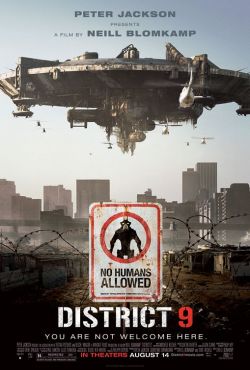
District 9. WingNut Films 2009.

Before watching the movie:

It’s always surreal to me to be reviewing movies I was aware of and wanted to watch around the time I started doing this. As I limit the regular reviews to “10+ years old” and “first watch”, obviously not much I had a lot of interest in at the time makes it a decade before I get to it.

I’ve heard this is an apartheid story in the guise of an aliens on Earth story. It’s not exactly the most attractive idea to watch a dystopia story where the opressors are humans and the opressed are not. That’s probably why after the hype died down I didn’t make an effort to get back to it.

Anyway, I decided I should do some mockumentaries, and I was surprised to see this come up on a list of them, so I’m taking the opportunity.

Continue reading

The Adventures of Pluto Nash

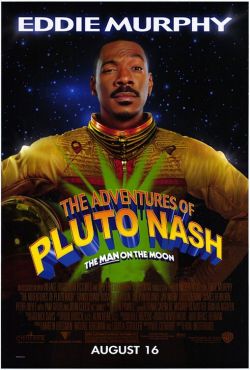
The Adventures of Pluto Nash. Castle Rock Entertainment 2002.

Before watching the movie:

I was vaguely aware of this movie coming out, and it looked vaguely interesting, but I couldn’t really tell much about it from what I saw. This poster, which is just about all the promotional material I saw at the time, tells you that it stars Eddie Murphy, that he’s having adventures on the moon, and it looks vaguely like throwback to the Flash Gordon serials.

This has since become known as one of Eddie Murphy’s biggest flops, which is a distinction with a lot of competition from the 90s through the 00s. I always got the idea it was either not the movie audiences wanted it to be or didn’t hit the tone it was trying for, or both. I can certainly see Summer 2002 being a very bad time for an homage/parody of 30s pulp sci-fi.

Continue reading

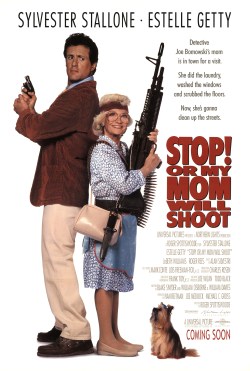
Stop! Or My Mom Will Shoot!

Stop! Or My Mom Will Shoot. Northern Lights Entertainment 1992.

Before watching the movie:

I don’t recall who made them, but I think this has appeared at least close to the top of lists of the worst movies of all time, which has always attracted me to it. What does it take to make a movie that bad? I’m sure Stallone fans were really disappointed to see him being embarrassed by his mother instead of blowing away mooks with dual-wielded machine rifles. But is the whole problem that it wasn’t what audiences wanted, or is it really just a bad movie? I’ve always wanted to find out.

Continue reading

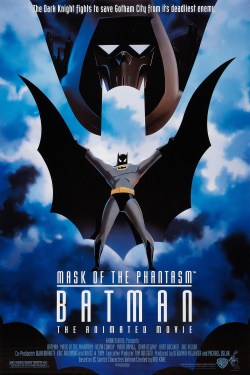
Batman: Mask of the Phantasm

Batman: Mask of the Phantasm. Warner Bros. 1993

Before watching the movie:

I have vague memories of watching Batman: The Animated Series as a kid. It was a thing that was on, sometimes I would watch it when it was available, but I don’t remember really making a habit of it. Even so, it defined Batman for me as a kid. I was aware of the live-action movies of course. I definitely remember at least one McDonald’s Happy Meal tie in that I got a Hot Wheels-size version of the best Batmobile out of, but I’m not sure the timelines actually sync up, since it would have been the 1991 promotion and I may have been a little young to be as aware of it as I remember.

Regardless, as for many my age, this is the definitive version of Batman to me. I’ve probably watched more episodes as an adult seeking them out, but the series brought as much plot and emotional complexity to half-hour episodes as was possible. It introduced characters and interpretations so compelling they were imported to the comics and other versions, it was the keystone to a shared-continuity animated franchise, and had two direct continuation series.

I’ve gotten around to Batman and Mister Freeze: Sub-Zero before, but I never made it to the first movie spinoff, the one that actually got released in theaters before. And it has taken me entirely too long to get here.

After watching the movie:

Batman busts a meeting of Gotham’s biggest crime lords, and in the ensuing chaos, Chuckie Sol gets accosted by a hooded, masked figure claiming to be his agent of death, who tricks him into crashing his car through a parking garage wall, leaving him dead. When bystanders look up at the commotion, they see Batman at the hole in the wall trying to understand what just happened, and news spreads fast that Batman might have graduated to murdering mob bosses. Councilman Arthur Reeves, in the mafia’s pocket, vows to finally have Batman arrested. Ten years earlier, in Bruce Wayne’s earliest days of crime fighting, before he figured out how to intimidate the criminals, he met Andrea Beaumont in the cemetery talking to her mother’s grave close to where Bruce was talking to his own parents, and they quickly bonded. Bruce became torn between the vow he made to his parents to avenge them against all crime in Gotham when he realized that plan never included having someone waiting for him at home, and their relationship ultimately ended in heartbreak. Now, Andrea is returning to Gotham, and Batman realizes that the gangsters getting killed all share a link with Andrea’s businessman father, but his investigation is hampered by Gotham law enforcement hunting him down for the same murders, while the next don on the Phantasm’s list has gone to a former mook and friend from the old days for help, now in business for himself as the Clown Prince of Crime.

When a movie gets made from a tv show, especially one still on the air, one of the important questions to answer is what can this do that an episode can’t. Aside from the corny early 90s CGI fly-through of Gotham skyscrapers right at the beginning that doesn’t contribute much except to show “look what we can do with a movie budget!” the answer is that I think this story plays with lore too integral to the Batman mythos to trust to a 30-minute story. It doesn’t just rehash Batman’s origin story, it goes inside the often-elided time when Bruce was still trying to figure out how to be a vigilante and tells us the love of his life we never knew about was there. It dangles the Joker’s life before he was the Joker in front of us. It shows us that Gotham once hosted a World’s Fair. And it does it all with incredible care, so that it feels like they’re sharing secrets instead of polluting an established story.

They also take a lot of time to explore the tragedy of being Bruce Wayne. For the first time here, he really has to wrestle with the conflict between what he feels he owes to his parents and a chance to let himself just be happy, and the weight of that dilemma is keenly felt. Of course, in a more realistic world, Bruce would be better served by getting therapy and realizing that maybe he took a flying leap from his parents getting accidentally shot in a mugging gone wrong to a duty to them to clean up all the crime in the city with only wits, fists, and gadgets, but this is not the world he lives in, and regardless of what he wants, becoming Batman is the destiny he cannot escape. And in this story, he rages against that.

Involving the Joker feels almost obligatory. The Phantasm may have unacceptable methods, but the motives are too sympathetic to be satisfyingly defeated alone, so one of the regular villains has to come in the last act to raise the stakes and be properly thwarted in the end. There’s really only one good reason it had to be the Joker, and one could argue that some of the other rogues could be made to make sense too (isn’t the Penguin a crime boss?), but he’s mostly just the one brought into the game late because he’s Batman’s most iconic antagonist, and this is this version of Batman’s first movie. It can feel about as lazy as making Moriarty the surprise mastermind behind every Sherlock Holmes mystery. A version of this story could probably be wrapped up with a dire fight against a well-prepared mob boss and his goons instead of against one of the Usual Suspects while on the run from the law. But Mark Hamill’s Joker is too charismatically sinister to be too upset about.

While this was shown in theaters, that was a relatively late decision, and it could’ve stood to have more production time to make it ready for cinemas instead of just a surprisingly good direct to video feature. I felt I was watching really good storytelling, but I didn’t quite feel like I was watching a real movie. Whatever it is or isn’t, even by the standards of Batman: TAS, this is masterful.

Ip Man

Ip Man. Golden Harvest 2008.

Before watching the movie:

I have heard this series mentioned a lot as some kind of great work that doesn’t have to be discussed because everyone in the conversation has already seen it. I’ve seen the sequels pop up from time to time, but the original movie doesn’t show up as much.

I have to admit I read the title as if it was English until I decided to look up what it’s about. What does a man of Ip do? Ip Man (or Yip Man, or Ip Mun, depending on the transliteration) is the name of a famous martial artist. He trained Bruce Lee. This is (very loosely) based on his early life. Apparently the story is about him standing up to invading forces to defend his village solo, which is to say it concerns things that absolutely didn’t happen to him in the Second Sino-Japanese war.

I have the understanding that while this movie did not originally get released in the US, it, or at least its sequels, brought Donnie Yen to the attention of American film studios. I do not know any of the names of the other actors, but it looks like they actually cast Japanese actors as the Japanese characters, which I suppose a Chinese production is more likely to do if they have access to Japanese actors, because Chinese audiences are very familiar with the differences between Chinese and Japanese people, unlike many in the American audience.

Continue reading

Safe House

Safe House. Filmquest Pictures 1999.

Before watching the movie:

For all the actors I mowed through the filmographies of when I first realized I had the ability to discover and summon movies, somehow I never did that for Patrick Stewart. Most Star Trek regulars don’t seem to have enough high profile projects outside of Star Trek to get me to think in those kinds of terms.

So I first heard of this movie from a viral video recasting a clip of it as “Look at how jarringly out of character Captain Picard is!” I had to look up the source, and it sounded funny, but it’s heavily marketed as a thriller. Maybe it moves from comedy to thriller?

Also it seems to be a TV movie, which I try to avoid, but here it is anyway.

Continue reading

Flying Blind

Flying Blind. Paramount Pictures 1941.

Before watching the movie:

I got as far as the title, that it’s a comedy, and the main character starting a charter air service between Los Angeles and Las Vegas for elopements, and trying to keep his stewardess from marrying another man and decided this would be a blast to watch.

I have a strange feeling I’ve seen Richard Arlen play a small airline pilot in a comedy before, but I don’t seem to have done this movie or the other two the producers made with him on this blog, and if I didn’t blog it, I don’t think I would have watched it.

It seems this is the first 1941 movie I’ve watched. Some years ago I made an effort to have covered every decade of the 20th century, maybe it’s time to fill in the holes by year. Around 52 updates a year and over ten years running, hopefully there aren’t that many holes.

Continue reading

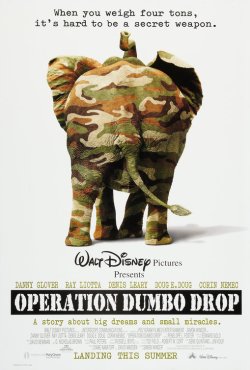
Movies of my Yesterdays: Operation Dumbo Drop

This is a movie I originally saw as the kind of catch up that I later turned into this blog, but the revolution was ordering holds from the library instead of online subscriptions. I have much stronger memories of seeing it advertised on other Disney movies than of the one time I watched it years ago. I mainly remembered that the ads made it look a bit more fun and kiddish than it actually was.

Operation Dumbo Drop. Walt Disney Pictures 1995.

Green Beret Captain T.C. Doyle has been assigned to replace Captain Sam Cahill in maintaining good relations between the US Military and the Vietnamese village of Dak Nhe, strategically important due to its proximity to the Ho Chi Minh Trail. When the Viet Cong soldiers find the wrapper from a candy bar some village children stole from Doyle and realize that Dak Nhe has been helping the Americans, they shoot the village’s elephant as a punishment. In this region, elephants are companions, workhorses, and have ceremonial roles, and the village elders blame Doyle for the loss of their only elephant, but Cahill promises that they will bring a new elephant by the end of the week in time for an important ceremony. Doyle and Cahill requisition two GIs and enough money to buy a new elephant, as well as blackmailing a fast-talking black market racketeer into the group as well. The elephant they can afford, named Bo Tat, comes with an orphaned boy named Linh attached as the driver. Linh’s parents died in the war, and he doesn’t trust either side, but the gang have to trust him to help them transport Bo Tat across hundreds of miles of Vietnamese terrain, while VC soldiers stalk them, determined to make the Americans break their promise.

I didn’t even remember from my initial viewing that this is set in the Vietnam War, but that’s because this is probably the most sanitized Vietnam War story put to film. The 90s were a time when morally grey heroes and antagonists were becoming popular, but the closest that this movie comes to acknowledging the crisis of conscience that America faced in Vietnam is that the American characters admit they can’t be sure which side killed Linh’s parents, and it turns out that his father was gunned down by the VC for unclear reasons. This could have easily been a romp in any jungle with American military presence at any time in the latter 20th century, it could have been Peace Corps, it could’ve been anyone else with any reason a bureaucratic organization stuck them thousands of miles from the Western world, but it’s based on a story from the Vietnam War, so it’s set in the theme park version of the Vietnam War.

There’s a really fun chemistry between the army guys that is most of the reason to watch the movie, however it seems a bit off-balance that of the two GIs who were just assigned as backup, one is the very visible comic relief guy who’s scared of everything because he’s got less than a week until he goes home and wants to survive the week, and the other is just the Iowa farmboy who’s also kinda there. His biggest contribution is failing at being a backup elephant driver when they need to rescue Linh from a VC interrogation.

In the 90s, “Dumbo” felt more like a generic nickname for elephants than it does now. I wonder if that’s because Disney tightened control over their trademark or if I just had a smaller reference pool. I seem to remember the use of “When I See an Elephant Fly” being a bit jarring the first time I watched it, because I didn’t necessarily remember until then that this was a Disney movie. It still feels a bit out of place and forced. If nothing else, it along with the title is a reminder that somebody seems to think that the whole movie is a vehicle for delivering the climax and little else.

I hope this is nobody’s only exposure to Vietnam War history, but aside from that, it’s fun, maybe as much fun as Cool Runnings, which I gather is also more in the territory of being “suggested by” history. Maybe Disney should do fewer “live action remakes” and go back to making more “adventures suggested by true stories”. Even if the results were controversial, they’d be controversial for less silly reasons than the fights over Belle’s dress or the completely soulless hypernaturalism of The Lion King. Also maybe more fun.

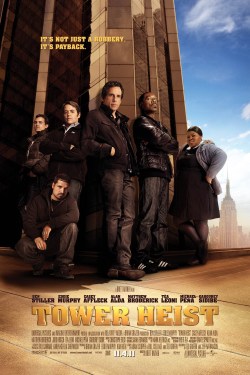
Tower Heist

Tower Heist. Universal Pictures 2011.

Before watching the movie:

I passed by this a few times because I generally don’t consider crime movies to be my kind of thing. But then I noticed that it has comedy actors leading it, so I looked closer, and saw that it’s not just about stealing money, it’s about folks who lost their retirement funds to a scummy hedge fund manager stealing it back, and that interests me a lot.

I get the sense that a lot of “revenge on the Wall Street crooks” movies came out in the years after the 2009 collapse, but I mainly get that from having seen Fun with Dick and Jane in the last year, which was very very loudly about surviving a Wall Street implosion (looking it up, I realize that movie in particular wasn’t about the 2009 collapse, but the timing seems more like it was about Enron).

Continue reading