I have a dim memory spatially associating the existence of this movie with the existence of Amelie, but I wouldn’t have been in the space I’m thinking about seeing posters of them (elementary school restroom hallway) after Amelie came out, and I don’t believe they would have put, really either of them, in that place. Anyway, I remember very slowly learning of the existence of this show and some time later actually digging just deeply enough to know what the title meant.
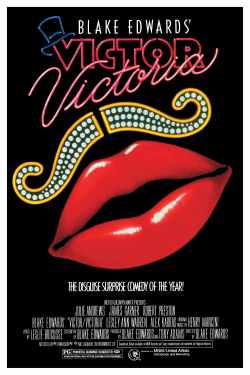
I expect some degree of playing with gender roles if the core of the plot is a woman impersonating a man in order to get work, and that’s about all I can guess at. I’ve seen surprisingly little of Julie Andrews’ work for how much she is an institution in entertainment.
When I think of classic musicals, this is one of the first ones that comes to mind. So I was a bit surprised to see the movie came out in 1985, when I always assumed it was one of the highlights of the musical trend of the 60s-70s. It turns out that it did open on stage in 1975, it just took a while to get made for the screen. My original criteria for “classic musical” was nothing from after 1980, which is why it wasn’t in my last series of classic musicals. But this feels more of a different age of musicals than what I consider to be modern musicals (though I guess shows from after sometime in the 2000s are by now yet another category from what I’m getting at).
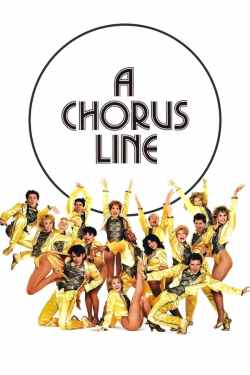
I don’t really know much beyond “I Hope I Get It”, so I know that it’s about musical performers desperate for jobs, so I expect a lot of diegetic numbers. I don’t really have an idea of the shape of a plot, if there even is much of one.
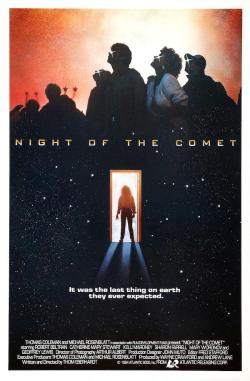
Night of the Comet. Coleman and Rosenblatt Productions 1984.
Before watching the movie:
I’ve heard this movie mentioned here and there but never that much about it. I didn’t even know the thing that happens the night that the comet comes is zombies until I was looking for zombie movies.
I really don’t know what else to expect. There’s a comet, and something happens, and zombie apocalypse, and it’s considered pretty good but not good enough to be that remembered in the mainstream.
I know very little about this movie but I saw that it’s a series of interacting vignettes and a mix of drama and comedy, so I’ll give it a try. It seems to have something to do with the interactions between passengers on a train so it should be interesting.
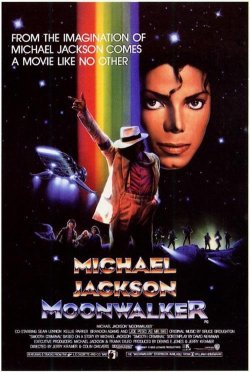
I’ve heard very little of this beyond that it exists and apparently isn’t just a concert film or a set of music videos. There was a video game tie-in that was only based on one of the segments, which is about half of what I ever heard about this.
This is another one of those movies where the title gets mentioned in passing but nobody really feels the need to talk about what it’s about. Eventually I got curious enough to track down a synopsis that satisfied me that it’s about an uncontacted tribesman coming into contact with the modernized world and finding “civilization” to be a confusing mess.
It also seems to have the kind of reputation you’d expect a movie made in the late 70s by white people about native Africans to have in terms of stereotyping.
I’ve heard the title of this movie thrown around a bit, but I never really understood much more. I didn’t know if it was a movie or a series or what, probably anime but maybe not. I assumed it was action, and probably grim and gritty, and that’s about the end of what I thought I knew, until I saw it called out as being extremely influential on Eastern and Western animation alike, and as the referent of that one motorbike slide that’s everywhere in animation.
It turns out this seems to also be the source of that “Neo-Tokyo” I’ve heard about. And this is probably why some of the names I hear come up a bunch in Anime circles come up so much, but I don’t know what Japanese names are more generic versus more unique.
This is one more legend that’s a bit of a black box. I know there’s a monster besieging a research station in the Arctic or Antarctic, and that’s about it. I think almost the entire movie goes without showing the monster? It might be an alien but it’s left ambiguous? The poster is as much of a masterpiece as the movie, they say, and it is a fantastic poster.
I dimly recall a TV special about practical and visual effects in horror movies in general that may have touched on this movie, but I’m not sure. The images I’m remembering could be almost any horror movie, but they could fit a frozen research station for all I know.
The summary on this that I saw first was pretty scant. Ringo Starr is a loser caveman, he wants to get the girl. I dug deeper and there wasn’t much more short of a blow by blow synopsis. There’s something about an adventure and exile, but it seems to just be “let’s put Ringo Starr in a silly costume and have some fun with how stupid cave people were.”
This movie has always existed. Or at least, it’s always existed in my world. As my ability to remember the past coalesced, this title was among the ones that was already in our collection, which I was watching regularly. Maybe not as regularly as others, but I can’t clearly remember how much I watched one or the other. Anyway, I wasn’t allowed to watch anything more than once in a day, which I came to realize later in life was probably mostly for the preservation of my parents’ sanity, and in a distant second, the cassette tapes my brother and I were wearing out.
I’m not sure if I have actually watched An American Tail since we gave up on our Betamax player long, long after that format war had been lost. Maybe I felt I’d rewatched it so many times I didn’t need to see it anymore. It didn’t hold all that much special significance for me to seek it out. Don Bluth movies are a little weird anyway, and of those that I was regularly exposed to in my youth, this doesn’t have the “wait, I don’t think I got the complexities of the plot” that The Secret of NIMH had, the polished, hit-me-in-just-the-right-moment chemistry of Anastasia, or the dinosaurs of The Land Before Time. And so I come back to it only now in a spirit of “wait, I don’t think I grasped the complexities of the emotions and satire”. By the time I really comprehended that it was about the immigration experience, I was too busy for it.
An American Tail. Amblin Entertainment 1986.
In Russia in the late 1800s, the Mousekewitz family lives in fear of cats, but otherwise content, though Papa will tell anyone who will or won’t listen of a land called America where there are no cats, a place of such abundance the streets are paved with cheese and a mouse can live at peace. When the human village their mousehole is in is burned in a pogrom and Cossack cats terrorize the fleeing mice, the Mousekewitz family boards a boat to New York. Shortly before arrival, the middle child Fievel is swept out to sea in a storm and given up for lost by his family. Luckily, Fievel ends up in a bottle and floats to shore on his own, where he is found by a French pigeon who assures him it’s possible to find his family and directs him to the harbor they would have come in through. However, before he can reach the immigration office, he is instead found by Warren T. Rat, who promises to take Fievel to his family but instead sells him to a sweatshop. With the help of an Italian teen named Tony, Fievel escapes the sweatshop and sets off looking for his family in a city that is not as free of cats as the tales they old in the Old Country.
Dom DeLouise’s friendly cat character is a much smaller part than I remembered, which is honestly just as well, though I think they corrected the oversight of having their biggest star in such a small role for the sequel. Christopher Plummer was completely unrecognizable with a French accent. I’m sorry to say that when I try to decide how I feel about Fievel’s performance, what mainly comes to mind is Caillou, the public television bane of parents everywhere. What is absolutely perfect, however, is Papa Mousekewitz, who sounds exactly like a beloved Jewish Russian father should (though that’s probably partly from stereotypes). There’s so much warmth there.
When I was very young, I didn’t really understand accents. That is, in the sense that I didn’t understand that they connoted something about the person speaking. This meant I lost a lot of information as a kid watching this movie, especially the other people telling their cat attack stories on the boat, who were not Italian and Irish stereotypes to me, just cartoon people with silly cartoon voices. So I guess I never picked up how just about every person Fievel interacts with in America is an immigrant, including Honest John the politician and Gussie Mausheimer the wealthiest mouse in town. The people helping Fievel, from the bottom to the top, are from elsewhere, even the ones who have cemented their place in American society. And by the end, so has Fievel.
I came into it this time expecting a relatable story of immigration, but I kind of feel like while Fievel’s circumstances get him into a variety of places that allow us to see a spectrum of life in a city full of immigrants, his own story is so out of the ordinary that I didn’t get that sense. Also, the story was a hundred years in the past when the movie came out, so culture has significantly changed. I guess the point of the story is that anything can happen in America, and when I think about why that’s more likely than in Europe, I have to come to the conclusion that social hierarchies were in flux because it was still a new society. That’s less true now than a hundred years ago. What hasn’t changed is the stark contrast between the reputation and reality of the New World, and the harsh conditions desperate people brave for their fresh start.






 Yesterday's Movies