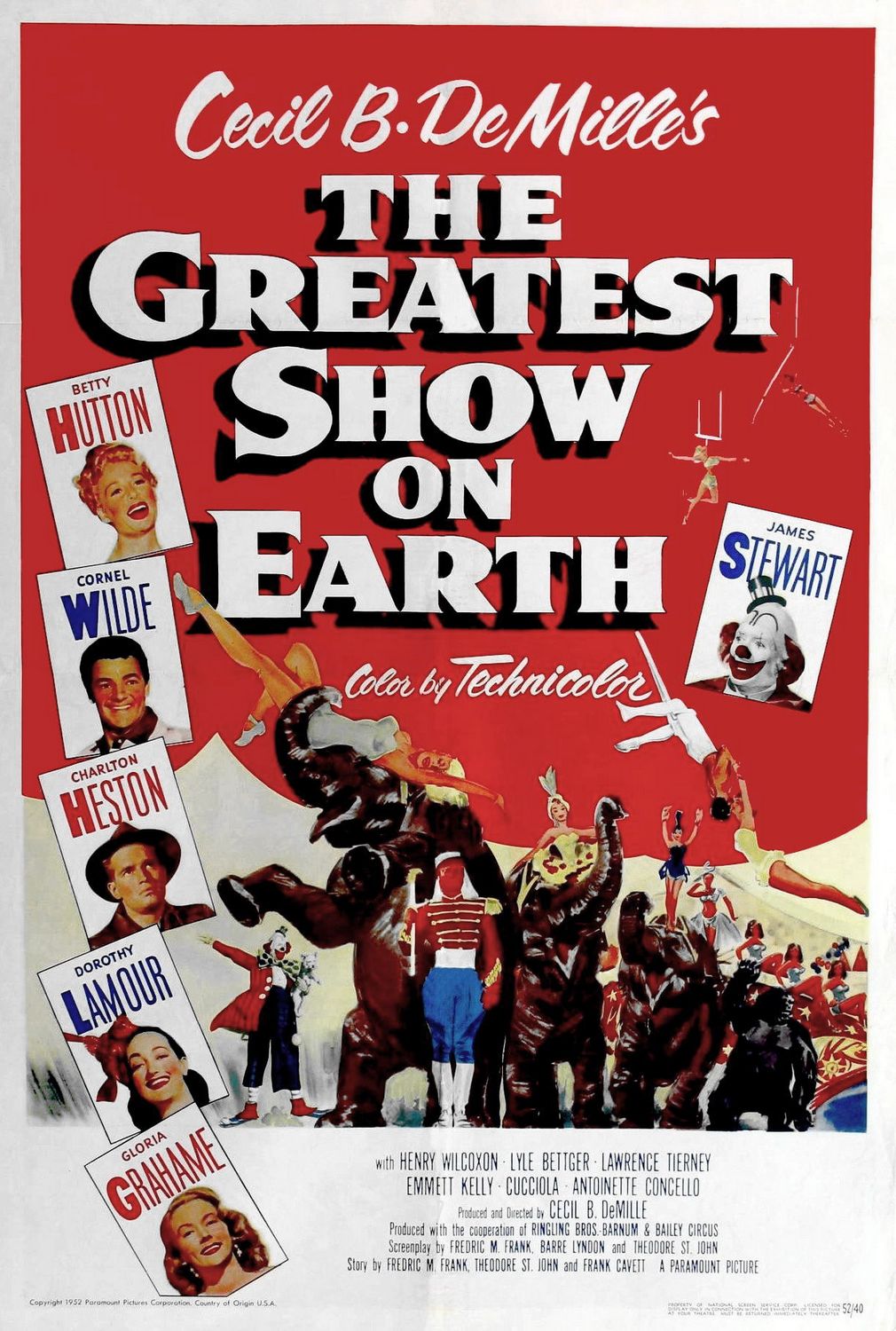
The Greatest Show on Earth. Paramount Pictures 1952.
Before watching the movie:
Much like State Fair, I get the idea this is is a movie that’s more about taking the audience to an event than actually telling a story. In this case, bringing the circus to an audience that doesn’t have a circus in town right now. I thought this was a musical, but it doesn’t appear to be. It is a Cecil B. DeMille epic however, and it makes perfect sense to pair a circus with a director known for massive crowds and setpieces. I’m not really sure a story about a circus can really be an “epic” in any sense but the spectacle and runtime though.
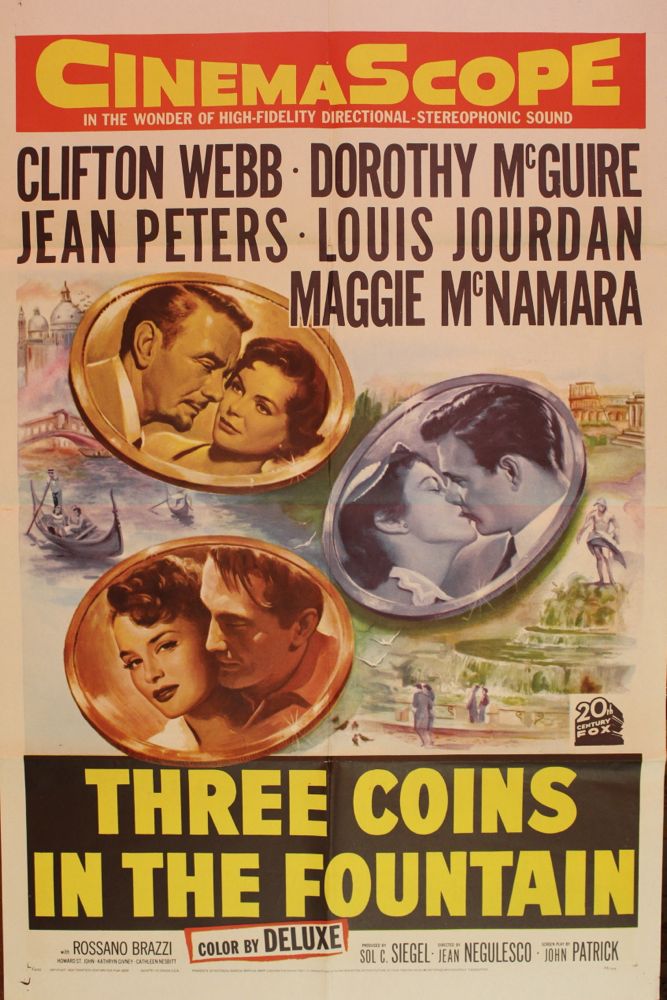
Three Coins in the Fountain. 20th Century Fox 1954.
Before watching the movie:
This is one of those movies that seem to boil down to a log line and nothing more enters the general consciousness. This is three romances centered wishes at Trevi Fountain. I know nothing more than this. It was shot on location because all the big Hollywood pictures were shot in Italy in those days. It seems to be a particularly fondly remembered example, but nobody seems to talk about much other than “shot on location” and “three American women in Rome wish for love”.
It’s in color and CinemaScope, so the Italian views won’t be squandered. In fact, I get the impression they’re the best part of the movie for a lot of people.
The Hound of the Baskervilles. Hammer Film Productions 1959.
Before watching the movie:
After the obvious Rathbone and Brett (at least, I think Brett is obvious), the historical Gilette, and the modern Cumberbatch and Downey, two of the biggest names I see discussed as great Holmes performances are Peter Cushing and Christopher Plummer, and I was hoping to get to include both in this farewell series. However, in my preparation, I found that Plummer’s most notable outing in the role was Murder by Decree, which I’ve already covered. I don’t want to reprise Holmses, so I’m afraid I won’t be covering Plummer again. However, Cushing is quite acceptable.
I admit my reference is limited, but all I know of Cushing’s career is Moff Tarkin in Star Wars, the forgotten Doctor Who (no, not that one, the other one. The really forgotten one. No, not that forgotten) from the two cinematic films, and that he was in quite a lot of Hammer films, a production company most known for highly regarded 60s and 70s B-horror films (don’t quote me on that summary). This is in fact a Hammer film, and probably considered a horror. So now I’ll have seen a Hammer Horror, probably.
John Wayne is remembered as playing cowboys or other heroes of the American West. So it always surprises me to learn that some of his most praised movies cast him as something else. Here, he’s an Irishman who spent some time as a boxer in America, but has come home to court a wife.
The main conflict appears to be that his lover’s brother doesn’t approve of the match, and the argument gets physical. Boy is that a mistake to let an argument come to blows with a professional boxer. I really hope that conflict is exaggerated by the synopsis I’m seeing and it’s mostly just courtship in the Irish countryside. I’m also curious to see if Wayne bothers with an Irish accent.
I always thought that a “Roman Holiday” was just recreation with wild abandon and no care for responsibility, like a Bacchanal, and as such I expected a carefree road movie. However, looking it up just now, I have learned that it was at least originally coined as an idiom to mean a depraved kind of schadenfreude (as in a crowd-pleasing public execution). Considering that the summary I’ve seen describes a sheltered princess escaping from her handlers and into the company of a reporter looking for a story, that seems ominous. But it’s a romantic comedy, so not very ominous.
I’ve known this movie existed for a long time, and never noticed the male lead is Gregory Peck. Nobody ever talks about Gregory Peck outside of To Kill a Mockingbird and Moby Dick anymore.
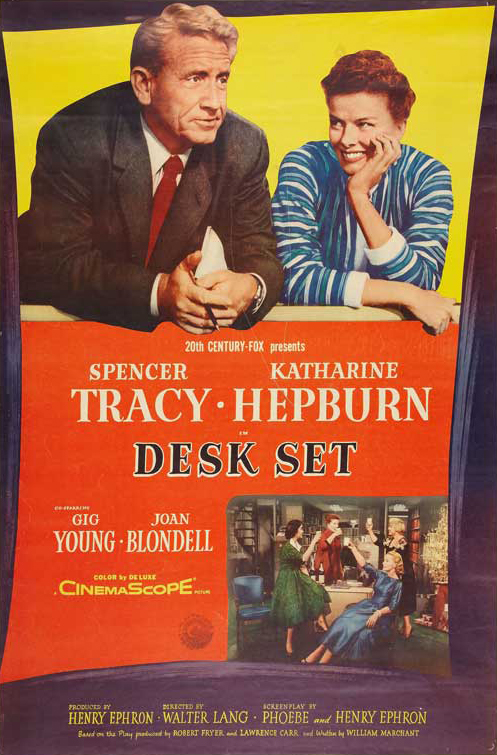
I can’t recall if this is something I saw come up specifically referenced by somebody as a story about a woman tasked with automating her research department and it turns out even just alone she’s better than the computer, or if this is unrelated and just came up in my algorithmic recommendations.
All I know for sure is that Spencer Tracy and Katharine Hepburn apparently do a lot of verbal sparring, and I’m a big fan of verbal sparring, especially by legends. I guess I haven’t seen all that much of Spencer Tracy. It may just be Guess Who’s Coming To Dinner and nothing else. But I know he’s highly regarded and that William Shatner in particular looked up to him.
It says this is a romantic comedy, and I’m wondering if the center couple is both Tracy and Hepburn. They seem mismatched in age.
Earth vs the Flying Saucers. Clover Productions 1956.
Before watching the movie:
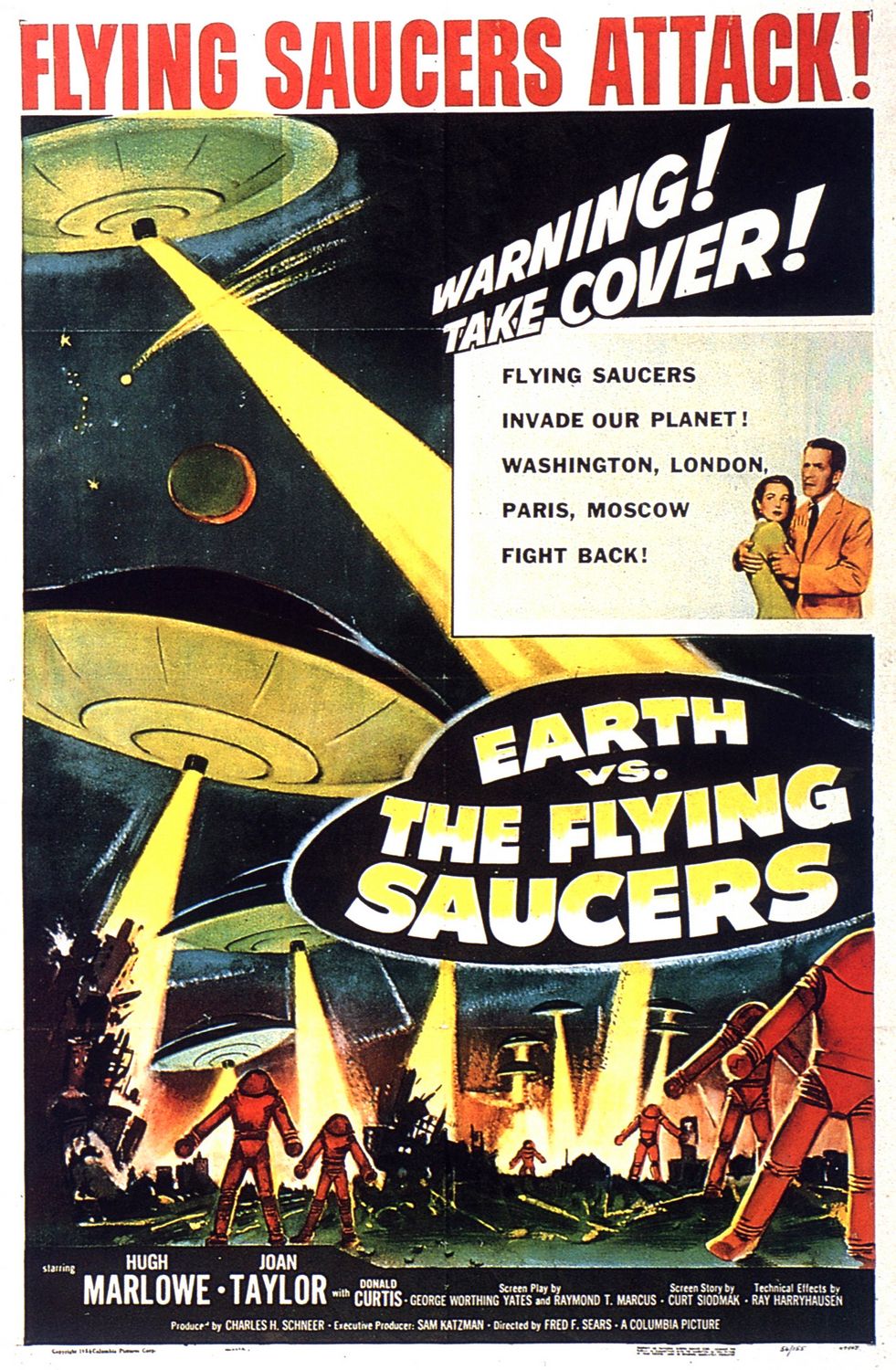
I’m closing the month with another sci-fi B-movie. I’m not sure how I first heard about this one, but I know it only by the title. It sounds like one Mystery Science Theater 3000 would have riffed, but they haven’t (at least, a cross-reference search only points to an episode for Earth vs. The Spider). It’s one of the B-Moviest of B-movie titles out there.
Knowing nothing of the plot besides the title (which pretty much spells it all out), I can only assume that the pilots of those flying saucers are eventually shown, so this can count as a monster movie. This seems to be a safe assumption, since the poster appears to show menacing ground troops, but these are either spacesuits, mechs, or robots. Which are probably good enough.
This isn’t in 3D, but I almost feel like I should wear red-blue glasses for it.
The Man from Planet X. Mid Century Film Productions 1951.
Before watching the movie:
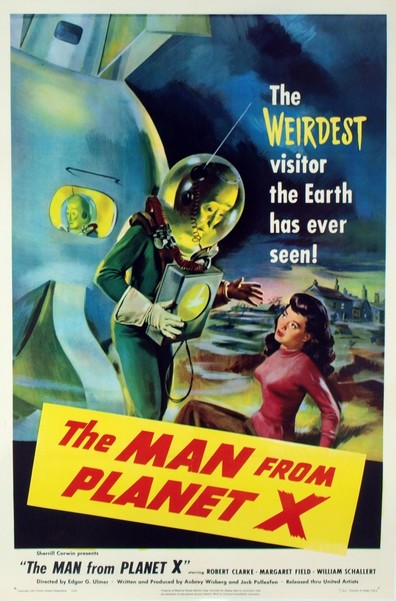
This sounds like one of the schlockiest sci-fi horror films not involving psychic brains crawling out of their jars or aliens raising zombies from a small town cemetery on the idea that it would get humans’ attention better than just touching down on the White House lawn. The story has the potential to rise above, but with what they had to work with, this is clearly made to shock the popcorn out of your lap.
One of the things that drew me to this movie was that the titular alien is apparently iconic enough to be featured/spoofed in the Area 52 sequence of Looney Toons: Back in Action. I can’t recall offhand if it was the only one I didn’t recognize, but it was very distinctive to be so unfamiliar.
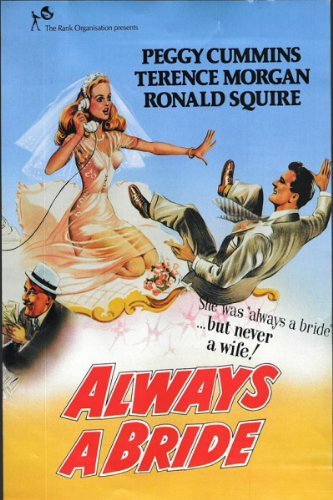
The concept sounds like it could be a stage play (it doesn’t appear to be), though the setting deserves a film. A father and daughter team travel up and down the Riviera posing as newlyweds (ew) to scam resort goers. Of course, she wants out, and she meets a romantic lead who might present an escape.
The only way a mid-century British comedy can go wrong (I hope) is by being too dry for a modern American audience, but even though it’s almost certainly not as madcap as it looks, this should still be fun.
Before watching the movie: Automatically recommended to me based on titles like The Fuzzy Pink Nightgown and Monkey Business, this appears to be somewhere between manners comedy and code-compliant titillation farce. A happily married man and a happily married woman who used to date get separated from their spouses, have to share a room at an inn, and find themselves in increasingly compromising situations.
What caught my attention are the words “British” and “Farce”. And Stanley Holloway, although I’m not sure if I’ve actually seen him in anything, or if his name is just close to Sterling Holloway. None of the other people involved ring any bells, although apparently Kay Kendall was a Name at the time. I’m just not familiar enough with that era, most likely. Continue reading →





 Yesterday's Movies