Soylent Green

Soylent Green. Metro-Goldwyn-Meyer 1973.

Before watching the movie:

Maybe the only thing most people know about this movie is the big reveal. It’s probably more spoiled than Citizen Kane but less than Darth Vader’s true identity. So what else do I know about it? Well, there’s a lot of other colors Soylent comes in, and Green is the newest. I think before I saw the poster just now I could’ve said we’ve already passed the future date of the movie.

I do have to say that naming a real life nutrition company “Soylent” after the fictional megacorporation committing brain-breaking sins against humanity is one of the most direct examples of geniuses who missed the point of their favorite story deciding to build the Torment Nexus.

Continue reading

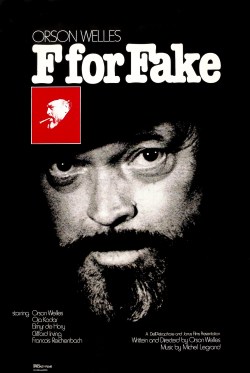
F For Fake

F For Fake. Janus Films 1973.

Before watching the movie:

I may have only heard of this film a few days before deciding to add it to my checklist (after thirteen years, I finally made a list that’s not just in my head or bookmarks on a streaming site). I know that it concerns Elmyr De Hory, an art forger so skilled and so prolific that the art market would like to pretend he doesn’t exist, and that it was made by Orson Welles, which caught my attention. Especially when I was looking for older theatrical documentaries, which are surprisingly hard to find recommendations for.

While Orson Welles is highly talked about as an actor and director, it occurs to me that his broadly known legacy doesn’t seem to extend much beyond War of the Worlds and Citizen Kane (and an infamous rant outtake on a frozen pea commercial). I was going to say this isn’t one of his better known works, but then, not much seems to be better known.

Continue reading

The Day of the Dolphin

The Day of the Dolphin. Avco Embassy Pictures 1973.

Before Watching the Movie:

There were three things that I knew about this movie when I decided I had to watch and review it:

  • It has George C. Scott
  • It features a plot to train a dolphin as an assassin
  • This insane pitch is a real movie made in the 70s.

It turns out that this is based on a novel, because even in the 70s, Hollywood can’t be so creative to put The Manchurian Candidate underwater. I also suspect that this was inspired by the ketamine-fueled investigations into dolphin speech by John C Lilly.

Continue reading

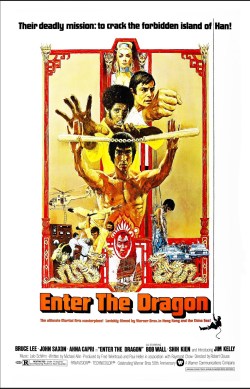
Enter the Dragon

Enter the Dragon. Concord Production 1973.

Before watching the movie:

This is lauded as possibly the best martial arts movie of all time, but I’m looking for something about the story to interest me and it seems like the barest excuse plot. British Intelligence goes to a martial arts instructor and points him at a crime lord. Oh, I guess there’s a tournament he’s going undercover in to get close to the bad guy. That’s a bit better than them just saying “go fetch”, but it’s still a pretty thin plot.

I would say the fights need to be exceptionally good to make up for the sketchy plot, but of course they are. That’s what everyone already cared about with this movie. I feel like I’m being weird for asking it to also have a story.

Continue reading

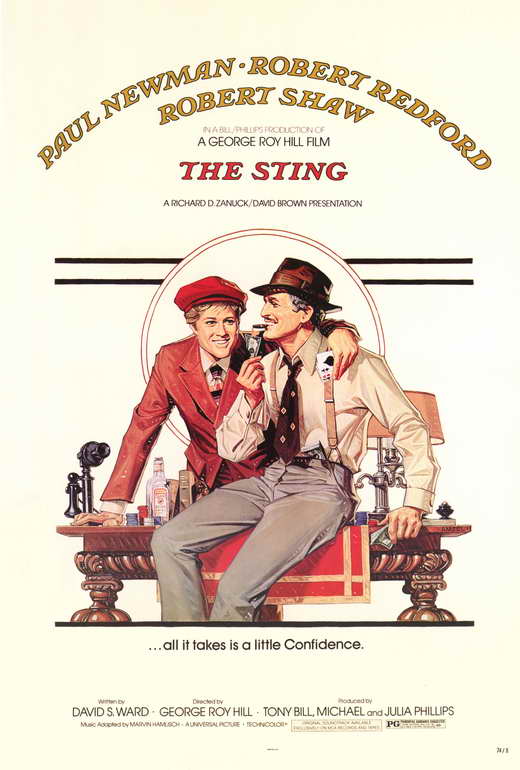
The Sting

The Sting. Universal Pictures 1973.

Before watching the movie:

What caught my attention was the Norman Rockwell/Saturday Evening Post style of the poster. Being a 70s movie, that may have little to do with the content of the movie and more with the state of movie poster art in the 1970s, but it suggests a throwback to the nostalgic view of the 1930s the movie is set in.

The synopses I’ve seen paint it as a dysfunctional duo of con men looking to steal a fortune from a mobster with a gambling scam. I’m not sure I’ve ever actually seen Robert Redford in anything yet, and I’ve been meaning to for a long time. I get the impression this is a high-stakes comedy, which is one of the best, or at least most respectable kinds.

Continue reading

Harry In Your Pocket

Harry In Your Pocket. Cinema Video Services 1973.

Before watching the movie:

What interested me in this movie was James Coburn. I think it was automatically recommended to me when I selected Bank Shot. I’m curious as to how a movie about building a pickpocketing ring can build tension, aside from the inner tension when the group doesn’t want to work together anymore.

From this poster, it looks more exploitative than I expected. But then, it was the early 70s, and I mainly know James Coburn from Our Man Flint and its sequel, a pair of somewhat exploitative James Bond spoofs.

Continue reading

The Three Musketeers/The Four Musketeers

The Three Musketeers/The Four Musketeers. Este Films 1973/1974.

Before watching the movie:

A large-budget film with a star-studded cast and strict attention to period accuracy could go poorly in all sorts of ways. The actors could fight for attention to the detriment of the film, the visual appeal could be lost in gritty details or vice versa, and the effort put into the enormous practical concerns could stomp out any entertainment value of the film.

These worries are only enhanced by the subject material. I vaguely recall an adaptation of The Three Musketeers in that a young man wants to be a Musketeer, gets in a fight with some, and then they all have adventures together. Rather dull, especially if one isn’t into swashbuckling tales.

I recognize many names, but I can connect hardly any of them with anything I know. At least it’s sold as a comedy, but I don’t expect much out of a 70s film.

Usually, I avoid sequels, but this pair was intended to be a single film, so I am taking it as one.

Continue reading

Sleeper

Sleeper. Rollins-Joffe Productions 1973.

Before watching the movie:


It occurs to me that I may not have actually seen any Woody Allen film before. I’ve seen him perform before, though possibly the only thing I’ve seen longer than a clip of is Antz.

That aside, once again I only realize at the moment I have to sum up my preconceptions that I don’t know what I’m getting into again. It sounds somewhat raunchy, but every adult comedy at the time was at least a little raunchy. For what it’s worth, it got a PG.

Ultimately, what I can say is that Woody Allen”s character finds himself in a future which no doubt is designed to be a satire on the world of its time.

Continue reading